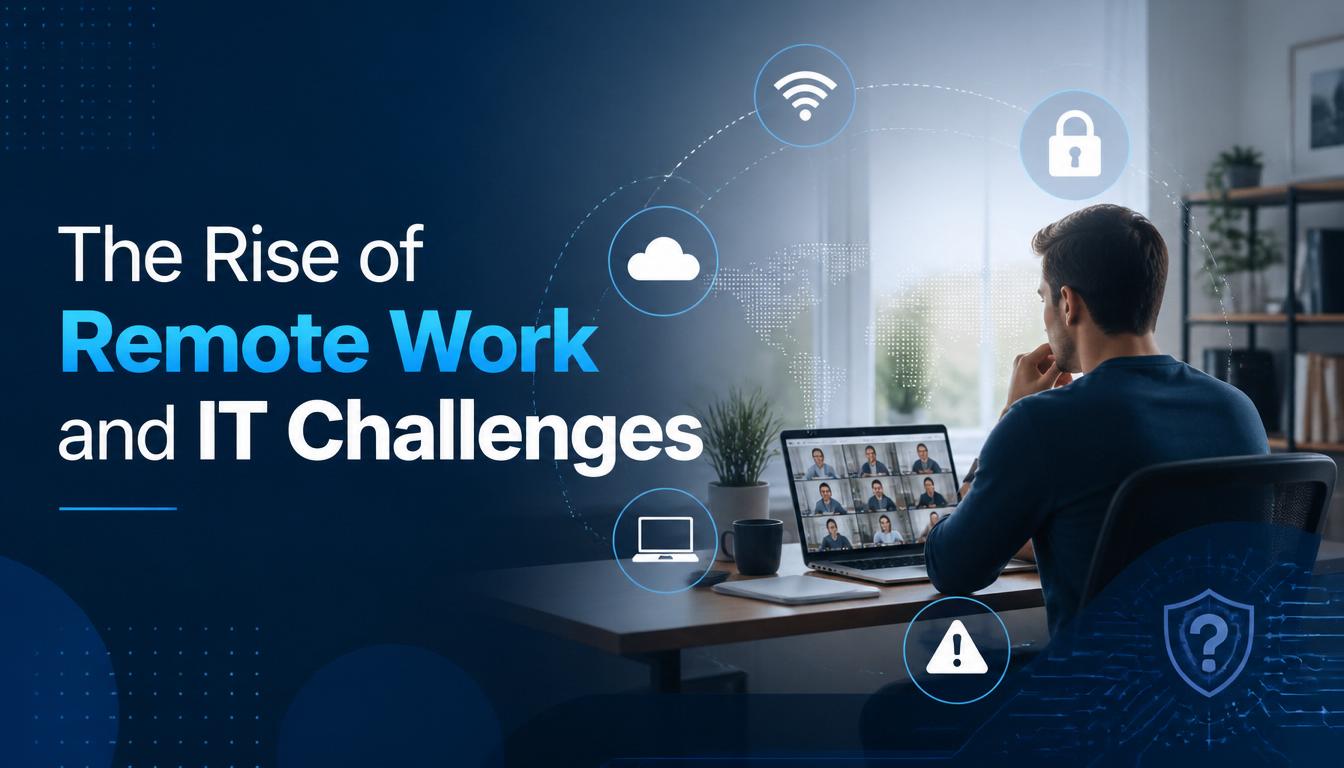
Remote work has rapidly transformed the modern workplace, changing how businesses operate, communicate, and manage teams. Advances in digital technology, cloud computing, and online collaboration tools have made it easier for employees to work from virtually anywhere.
While remote work offers flexibility, productivity benefits, and reduced operational costs, it also introduces several IT challenges that businesses must address to maintain efficiency, security, and seamless operations.
As remote and hybrid work models continue to grow, organizations must adapt their IT infrastructure and strategies to support this evolving work environment.
One of the secret benefits of using remote workers is that the work itself becomes the yardstick to judge someone’s performance.
Jason Fried, Published Author of Office Not Required
The Growth of Remote Work
Businesses across different industries are embracing remote work due to changing workforce expectations and advancements in digital technologies.
Factors Driving Remote Work
- Cloud computing solutions
- Faster internet connectivity
- Collaboration platforms
- Mobile technologies
- Demand for workplace flexibility
Remote work allows businesses to access wider talent pools, improve employee satisfaction, and reduce physical office expenses.
Benefits of Remote Work for Businesses
1. Increased Flexibility
Employees can work from different locations while maintaining productivity and communication.
2. Reduced Operational Costs
Businesses can reduce expenses related to office space, utilities, and physical infrastructure.
3. Improved Productivity
Many employees experience better focus and work-life balance when working remotely.
4. Access to Global Talent
Remote work allows businesses to hire skilled professionals from different locations.
Although remote work offers many advantages, it also creates significant IT and operational challenges.
Major IT Challenges of Remote Work
1. Cybersecurity Risks
One of the biggest challenges of remote work is maintaining strong cybersecurity across distributed work environments.
Common Security Risks
- Phishing attacks
- Unsecured home networks
- Weak passwords
- Unauthorized access
- Data breaches
Employees working outside secured office environments may expose business systems to greater security threats.
Solutions
- Use multi-factor authentication (MFA)
- Implement VPN access
- Provide cybersecurity training
- Use endpoint security solutions
- Enforce strong password policies
Strong cybersecurity measures are essential for protecting sensitive business information.
2. Data Management and Access Control
Remote teams often need access to business files, applications, and databases from multiple locations and devices.
Challenges
- Managing file access permissions
- Preventing unauthorized access
- Maintaining data consistency
- Secure file sharing
Solutions
- Use cloud-based storage systems
- Implement role-based access controls
- Encrypt sensitive data
- Monitor user activity
Effective data management improves security and operational efficiency.
3. Communication and Collaboration Issues
Remote work can create communication gaps and reduce team collaboration if businesses lack proper digital tools.
Common Problems
- Delayed communication
- Poor project coordination
- Reduced team interaction
- Difficulty managing workflows
Solutions
- Use collaboration platforms
- Schedule regular team meetings
- Implement project management tools
- Encourage transparent communication
Strong communication systems help remote teams stay connected and productive.

4. IT Support and Technical Assistance
Providing technical support to remote employees can be more difficult compared to traditional office environments.
Common Technical Challenges
- Device configuration issues
- Internet connectivity problems
- Software installation difficulties
- Troubleshooting remote systems
Solutions
- Offer remote IT support services
- Use remote monitoring tools
- Provide employee technical training
- Maintain centralized IT management
Reliable IT support ensures smooth business operations for remote teams.
5. Network and Infrastructure Limitations
Remote work depends heavily on internet connectivity and digital infrastructure.
Infrastructure Challenges
- Slow internet connections
- Limited bandwidth
- System downtime
- Inconsistent access to business applications
Solutions
- Use cloud infrastructure
- Optimize network performance
- Implement backup systems
- Use scalable digital solutions
Strong infrastructure supports productivity and operational continuity.
6. Device and Endpoint Security
Employees often use laptops, mobile devices, and personal computers to access business systems remotely.
Risks
- Lost or stolen devices
- Malware infections
- Unsecured personal devices
Solutions
- Use device management systems
- Install antivirus software
- Encrypt devices
- Restrict unauthorized installations
Endpoint security helps protect business systems from external threats.
7. Maintaining Productivity and Accountability
Remote work environments can sometimes make it harder to track performance and maintain accountability.
Challenges
- Reduced supervision
- Time management issues
- Workflow monitoring difficulties
Solutions
- Use productivity tracking tools
- Set clear performance goals
- Implement project management systems
- Encourage regular reporting
Clear expectations and digital management tools improve productivity and accountability.
The Future of Remote Work
Remote work is expected to remain a major part of modern business operations. Many organizations are adopting hybrid work models that combine remote and in-office work environments.
To remain competitive, businesses must continue investing in:
- Cloud solutions
- Cybersecurity systems
- Collaboration technologies
- Scalable IT infrastructure
- Remote support systems
Organizations that successfully adapt to remote work trends will improve flexibility, productivity, and long-term business resilience.
Final Thoughts
The rise of remote work is transforming business operations and creating new opportunities for flexibility and growth. However, businesses must also address the IT challenges associated with remote environments, including cybersecurity, communication, infrastructure, and data management.
By implementing modern digital solutions, strong security practices, and reliable IT support systems, businesses can create secure, productive, and efficient remote work environments that support long-term success.
As businesses continue to embrace remote work, having secure and reliable IT systems is more important than ever. You may also enjoy our articles on Common IT Mistakes Small Businesses Make and Website Security Best Practices for Small Businesses. Discover how our IT Consulting & Support Services can help your organization stay productive and secure.

Leave a Reply
Your email address will not be published. Required fields are marked *