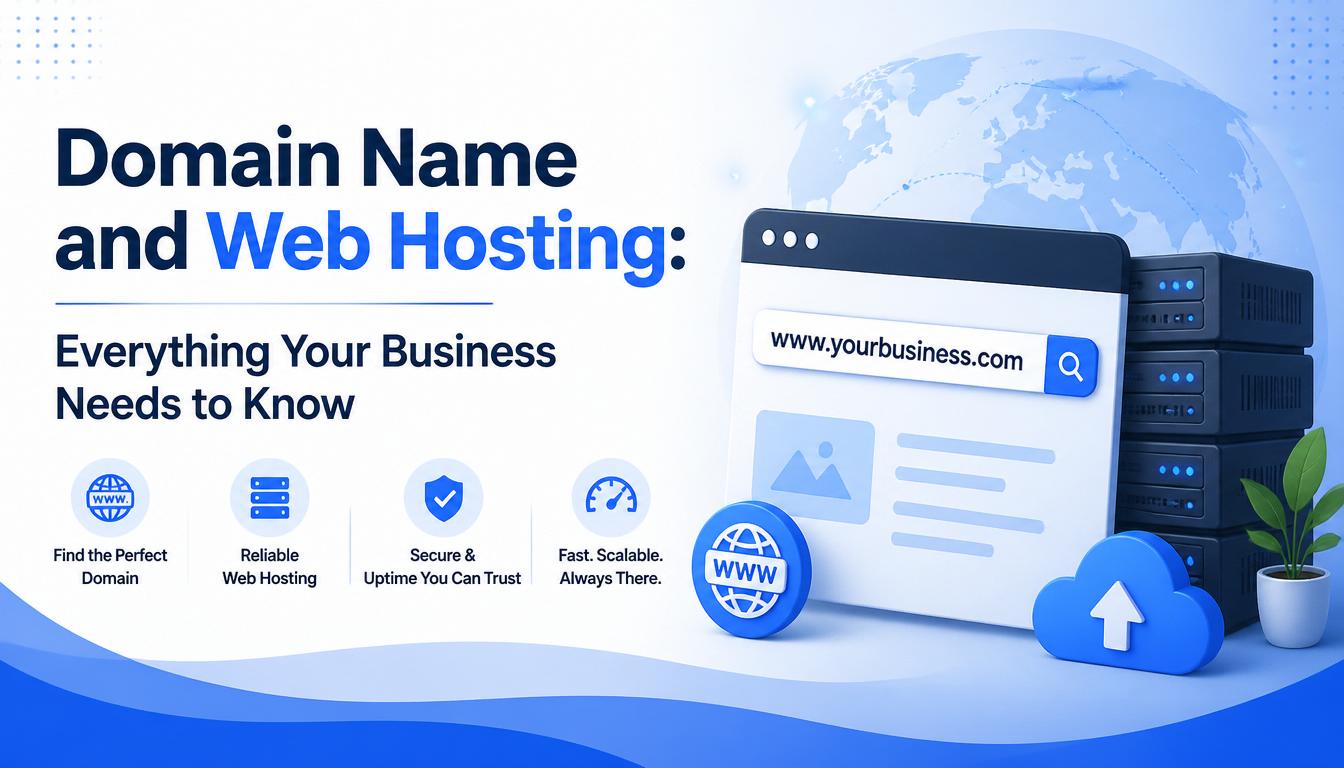
If you're planning to create a website for your business, you've probably come across the terms domain name and web hosting. While these terms are often mentioned together, they serve completely different purposes.
Understanding the difference between a domain name and web hosting is essential for anyone looking to establish a professional online presence. Whether you're launching a business website, e-commerce store, blog, or web application, both components are necessary to make your website accessible on the internet.
Think of hosting as renting a home: The server is the house... The domain name is like your house address, directing visitors to the right location.
Serverion
In this guide, we'll explain what domain names and web hosting are, how they work together, and how to choose the right solution for your business.
What is a Domain Name?
A domain name is your website's address on the internet.
Just as a physical business has a street address, a website has a domain name that people use to find it online.
Examples of Domain Names
- google.com
- facebook.com
- amazon.com
- soarit.com.ng
Instead of remembering complex IP addresses, users can simply type your domain name into a web browser to access your website.
Why is a Domain Name Important?
A domain name helps establish your online identity and makes your business easier to find.
Benefits of Having a Professional Domain Name
- Builds credibility and trust
- Makes your business look professional
- Strengthens brand recognition
- Improves online visibility
- Creates professional email addresses
For example:
info@yourbusiness.com looks far more professional than a generic email address.
What is Web Hosting?
Web hosting is the service that stores your website files and makes them available online.
When someone visits your website, their browser connects to your hosting server to retrieve your website's content.
Think of it this way:
Domain Name = Address
Web Hosting = Building
Your domain name tells visitors where to go, while your hosting provides the space where your website lives.
How Web Hosting Works
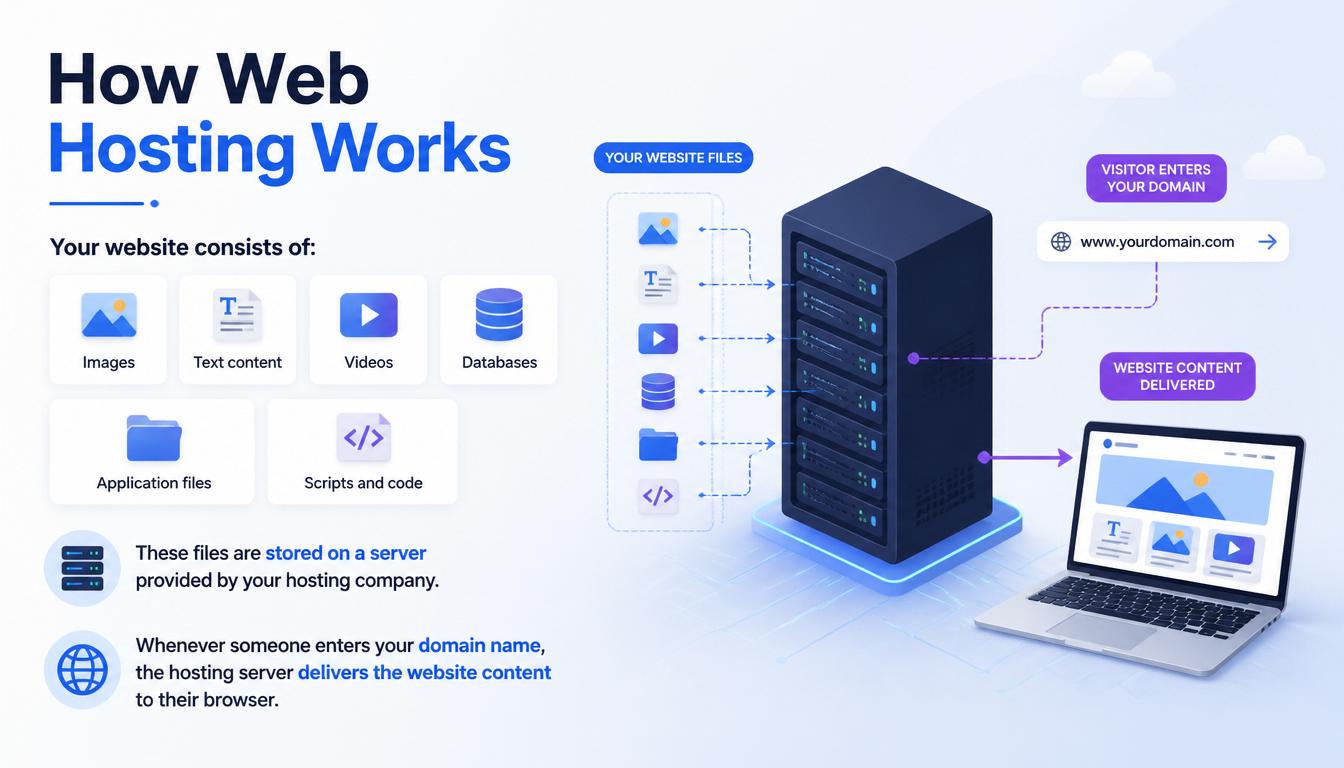
Your website consists of:
- Images
- Text content
- Videos
- Databases
- Application files
- Scripts and code
These files are stored on a server provided by your hosting company.
Whenever someone enters your domain name, the hosting server delivers the website content to their browser.
Why Web Hosting is Important
Reliable hosting directly affects your website's performance.
Good Hosting Provides
- Fast loading speeds
- High uptime
- Strong security
- Data backups
- Technical support
- Scalability
Poor hosting can result in slow performance, security vulnerabilities, and website downtime.
Types of Web Hosting
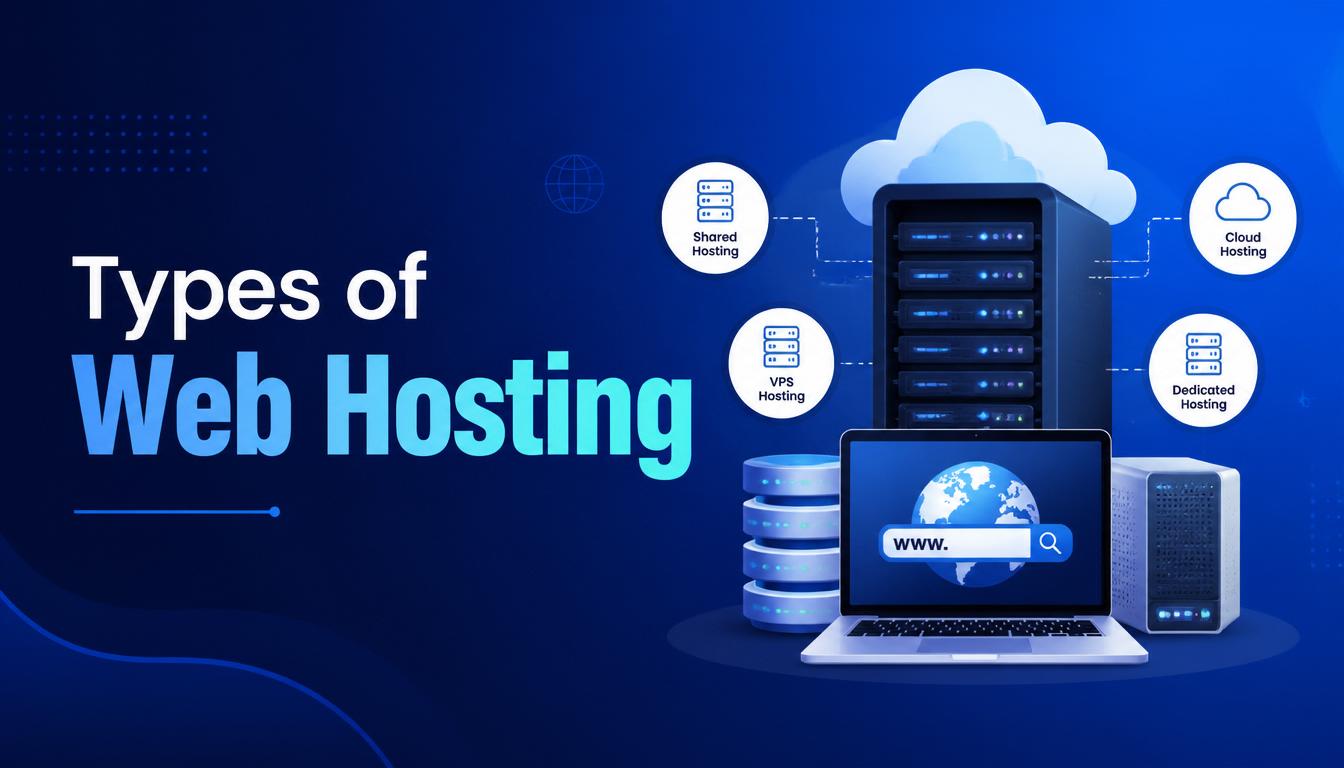
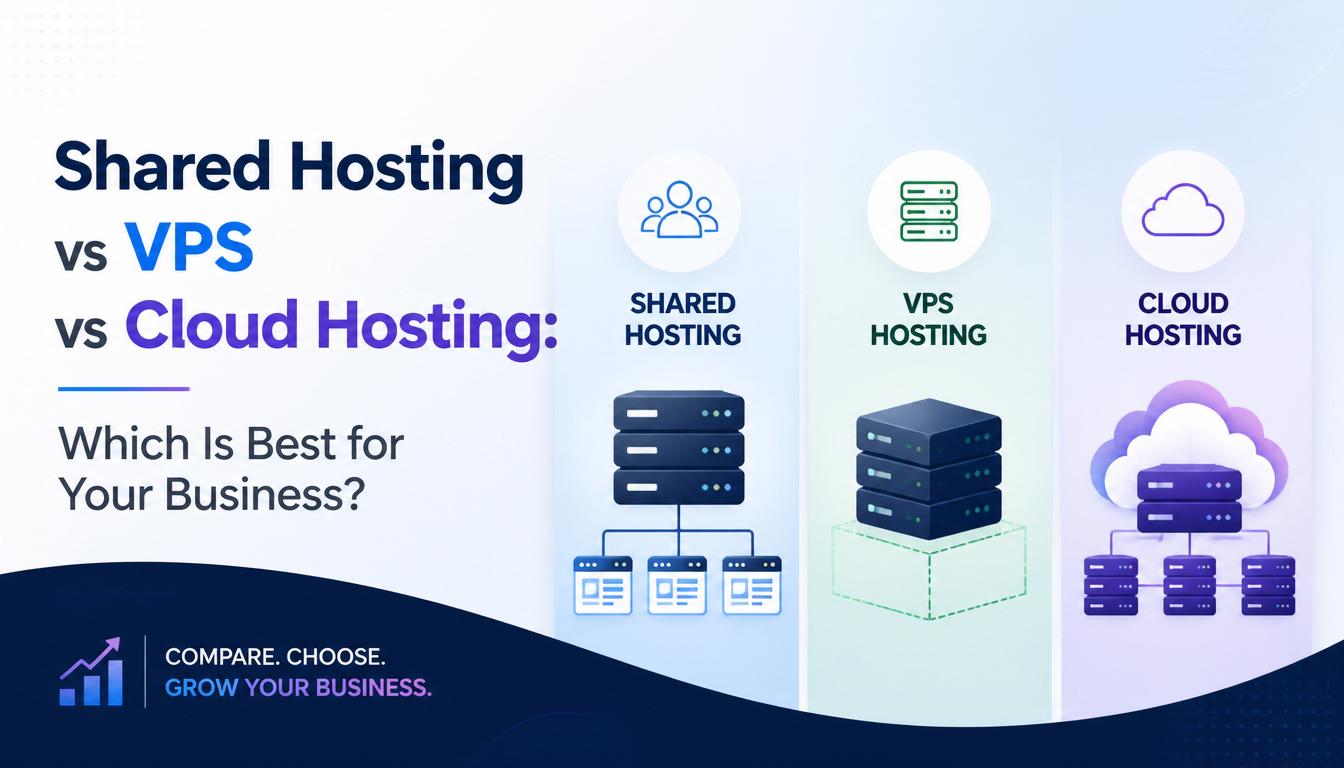
Shared Hosting
Multiple websites share the same server resources.
Best For:
- Small businesses
- Personal websites
- Startups
Advantages:
- Affordable
- Easy to manage
Limitations:
- Limited performance
- Shared resources
VPS Hosting
A Virtual Private Server provides dedicated resources within a shared environment.
Best For:
- Growing businesses
- Medium-sized websites
Advantages:
- Better performance
- Greater control
Dedicated Hosting
A business gets an entire server exclusively.
Best For:
- Large organizations
- High-traffic websites
Advantages:
- Maximum performance
- Enhanced security
Cloud Hosting
Cloud hosting distributes website resources across multiple servers.
Best For:
- Modern businesses
- Scalable applications
- E-commerce platforms
Advantages:
- High reliability
- Scalability
- Better performance
How Domain Names and Hosting Work Together
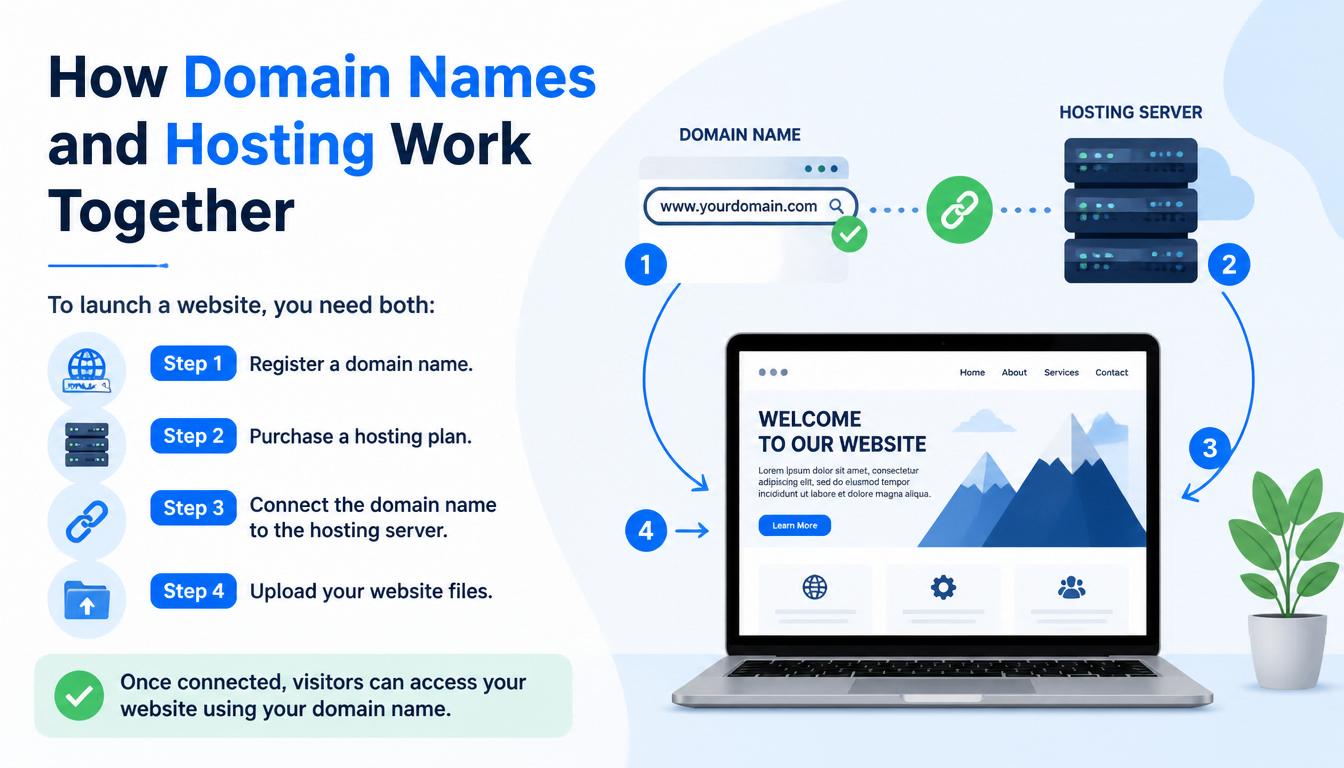
To launch a website, you need both:
- Step 1
- Step 2
- Step 3
- Step 4
Register a domain name.
Purchase a hosting plan.
Connect the domain name to the hosting server.
Upload your website files.
Once connected, visitors can access your website using your domain name.
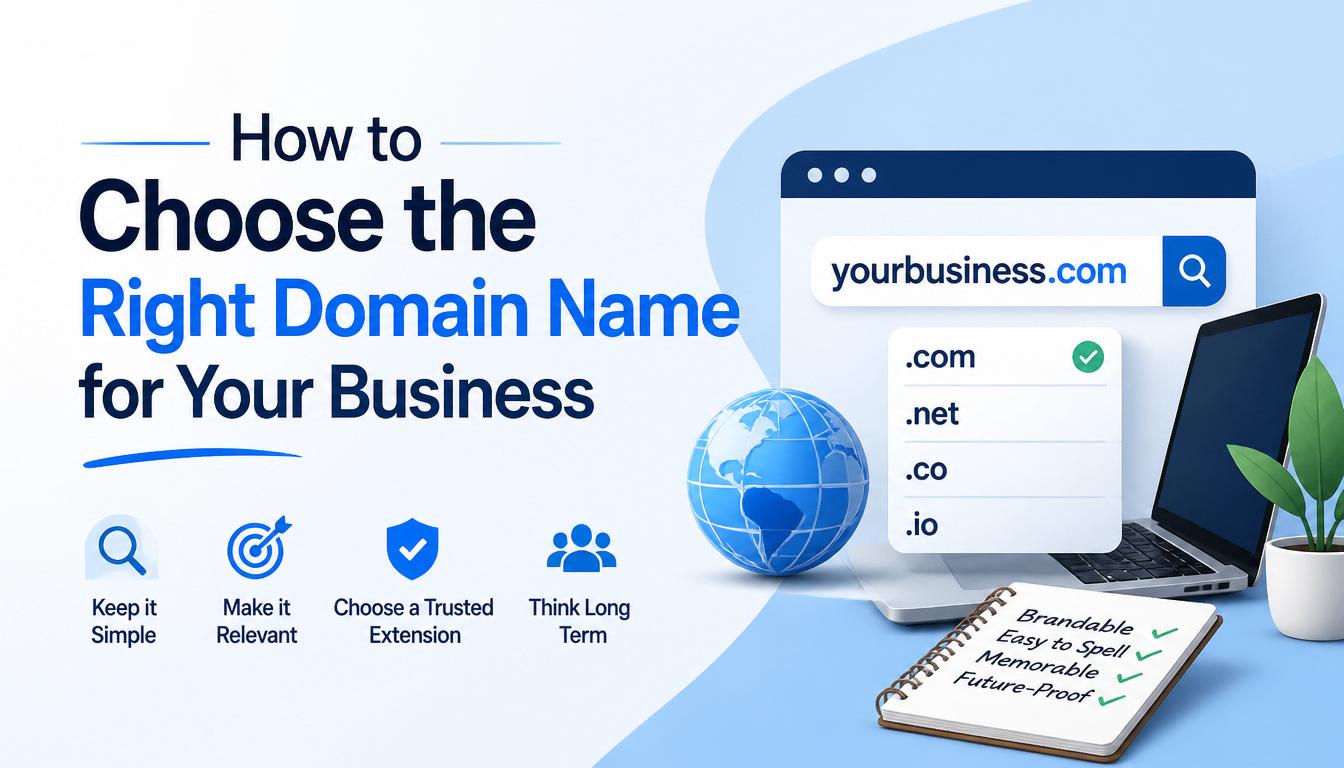
How to Choose the Right Domain Name
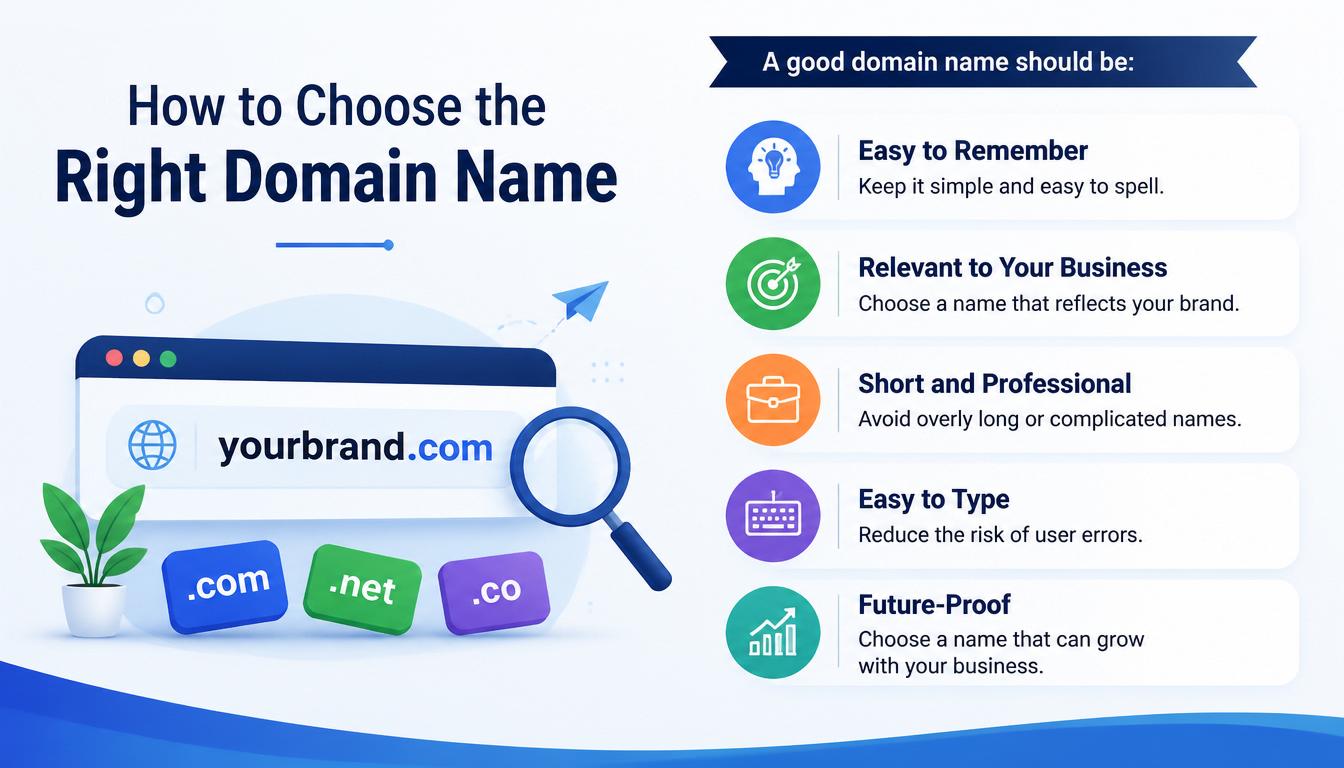
A good domain name should be:
- Easy to Remember
- Relevant to Your Business
- Short and Professional
- Easy to Type
- Future-Proof
Keep it simple and easy to spell.
Choose a name that reflects your brand.
Avoid overly long or complicated names.
Reduce the risk of user errors.
Choose a name that can grow with your business.
Common Domain Extensions and Their Purpose
When registering a domain name, you'll need to choose a domain extension (also known as a Top-Level Domain or TLD). The extension appears after the dot in your website address and can help communicate the purpose, location, or nature of your website.
Here are some of the most common domain extensions and their uses:
| Extension | Meaning | Best For |
|---|---|---|
| .com | Commercial | Businesses, brands, and general-purpose websites |
| .org | Organization | Non-profits, charities, and community organizations |
| .net | Network | Technology companies, internet services, and networking businesses |
| .edu | Education | Accredited educational institutions |
| .gov | Government | Government agencies and public institutions |
| .mil | Military | Military organizations |
| .info | Information | Informational websites, blogs, and resources |
| .biz | Business | Small businesses and commercial websites |
| .co | Company/Corporation | Startups, businesses, and entrepreneurs |
| .io | Input/Output | Technology companies, SaaS platforms, and startups |
| .ai | Artificial Intelligence | AI companies, machine learning platforms, and tech startups |
| .app | Application | Mobile apps, software products, and web applications |
| .store | Store | E-commerce and online retail businesses |
| .online | Online Presence | General websites and digital businesses |
| .tech | Technology | Technology-focused companies and professionals |
| .blog | Blog | Bloggers, content creators, and publishers |
Country-Specific Domain Extensions
Country-code domains help businesses target customers in a specific country.
Popular Country Domains
| Extension | Country |
|---|---|
| .ng | Nigeria |
| .com.ng | Nigeria |
| .org.ng | Nigeria |
| .uk | United Kingdom |
| .co.uk | United Kingdom |
| .ca | Canada |
| .au | Australia |
| .za | South Africa |
| .gh | Ghana |
| .ke | Kenya |
| .us | United States |
Understanding Nigerian Domain Extensions
For businesses operating in Nigeria, local domain extensions can help establish credibility and local relevance.
.com.ng
Ideal for:
- Small businesses
- Startups
- Local brands
- E-commerce stores
Example: yourbusiness.com.ng
.ng
Ideal for:
- Established brands
- Large organizations
- Premium Nigerian businesses
Example: yourbusiness.ng
.org.ng
Ideal for:
- NGOs
- Religious organizations
- Foundations
- Community groups
Example: yourorganization.org.ng
.edu.ng
Reserved for accredited educational institutions in Nigeria.
.gov.ng
Reserved for Nigerian government agencies.
Which Domain Extension Should You Choose?
Choose .com if:
- You want a globally recognized domain.
- Your business serves international customers.
- The .com version is available.
Choose .com.ng if:
- Your primary audience is in Nigeria.
- You want a more affordable option.
- You want to emphasize your Nigerian presence.
Choose .ng if:
- You want a premium Nigerian brand identity.
- You are building a strong national brand.
Choose .org if:
- You operate a non-profit or charity organization.
Choose .ai or .tech if:
- Your business focuses on technology or artificial intelligence.
Does the Domain Extension Affect SEO?
Google has stated that most domain extensions do not automatically improve rankings.
However, domain extensions can indirectly affect SEO by:
- Increasing user trust
- Improving click-through rates
- Enhancing local relevance
- Strengthening brand recognition
For example, a Nigerian customer may trust yourbusiness.com.ng more than a less familiar extension when searching for local services.
How to Choose the Right Hosting Provider
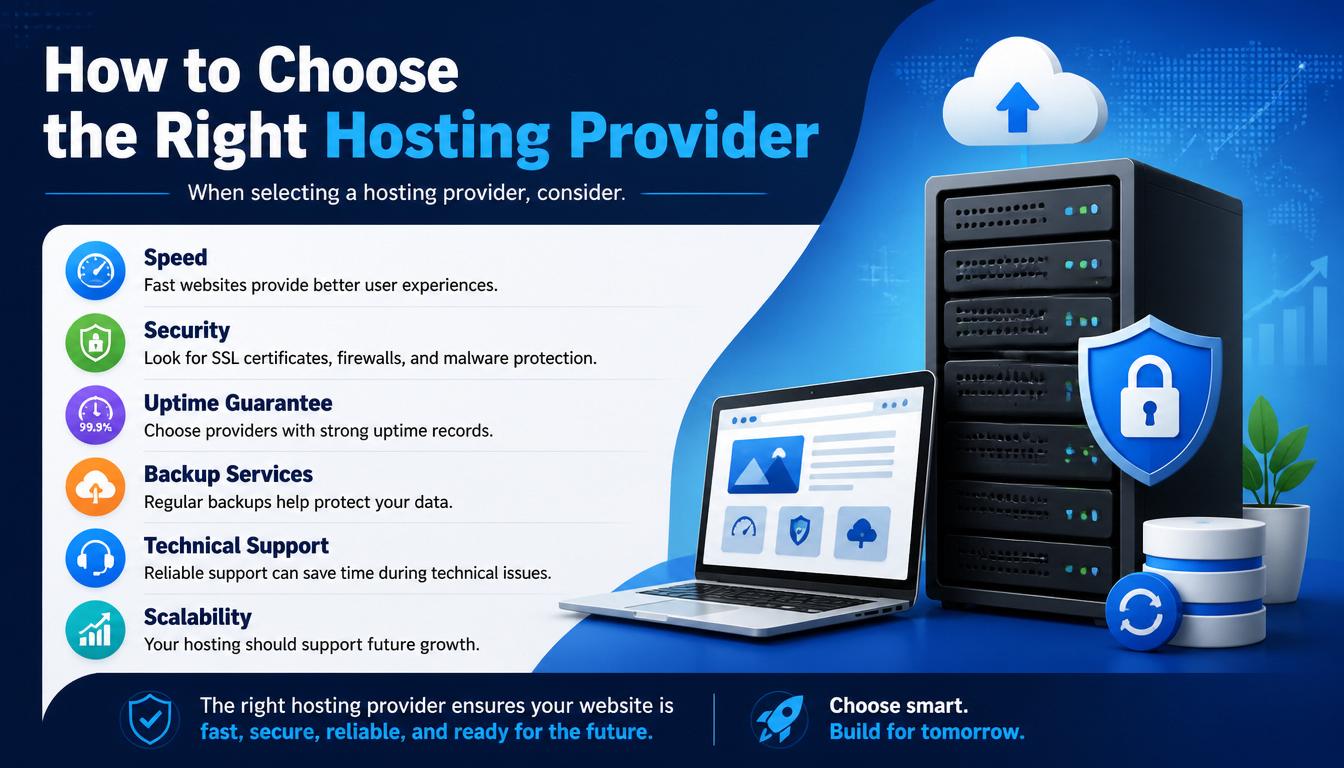
When selecting a hosting provider, consider:
- Speed
- Security
- Uptime Guarantee
- Backup Services
- Technical Support
- Scalability
Fast websites provide better user experiences.
Look for SSL certificates, firewalls, and malware protection.
Choose providers with strong uptime records.
Regular backups help protect your data.
Reliable support can save time during technical issues.
Your hosting should support future growth.
Common Mistakes to Avoid
- Choosing the Cheapest Option
- Ignoring Security
- Not Backing Up Data
- Using Complicated Domain Names
- Not Planning for Growth
Low-cost services may sacrifice reliability and performance.
Security should always be a priority.
Regular backups help prevent data loss.
Complex names are difficult for customers to remember.
Choose solutions that can scale as your business expands.
Why Your Business Needs Both
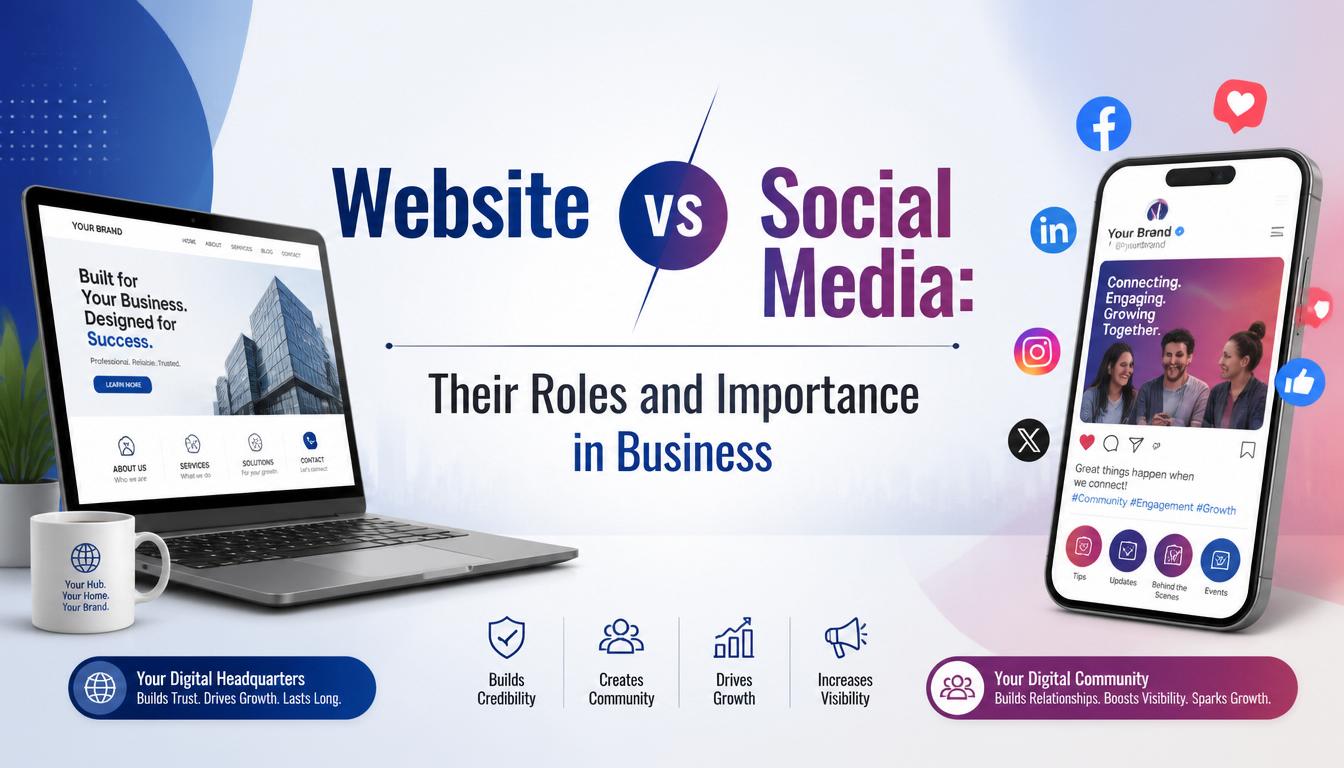
Many new business owners assume a social media page is enough.
However, a website gives you:
- Full ownership of your online presence
- Greater credibility
- Better search engine visibility
- More control over customer interactions
Final Thoughts
A domain name and web hosting are the building blocks of every website. While a domain name provides your online identity, web hosting stores and delivers your website content to visitors around the world.
Choosing the right domain and hosting solution can improve your website's performance, security, reliability, and long-term success.
Whether you're launching a new business website or upgrading an existing one, investing in quality domain and hosting services is a critical step toward building a strong digital presence.
At SOAR IT, we help businesses register domain names, set up secure web hosting, and develop professional websites that support growth and success.
Ready to Launch Your Website?
Whether you need domain registration, web hosting, or a complete website solution, SOAR IT can help you get started.
Contact SOAR IT today and let's build your online presence the right way.
Related Resources
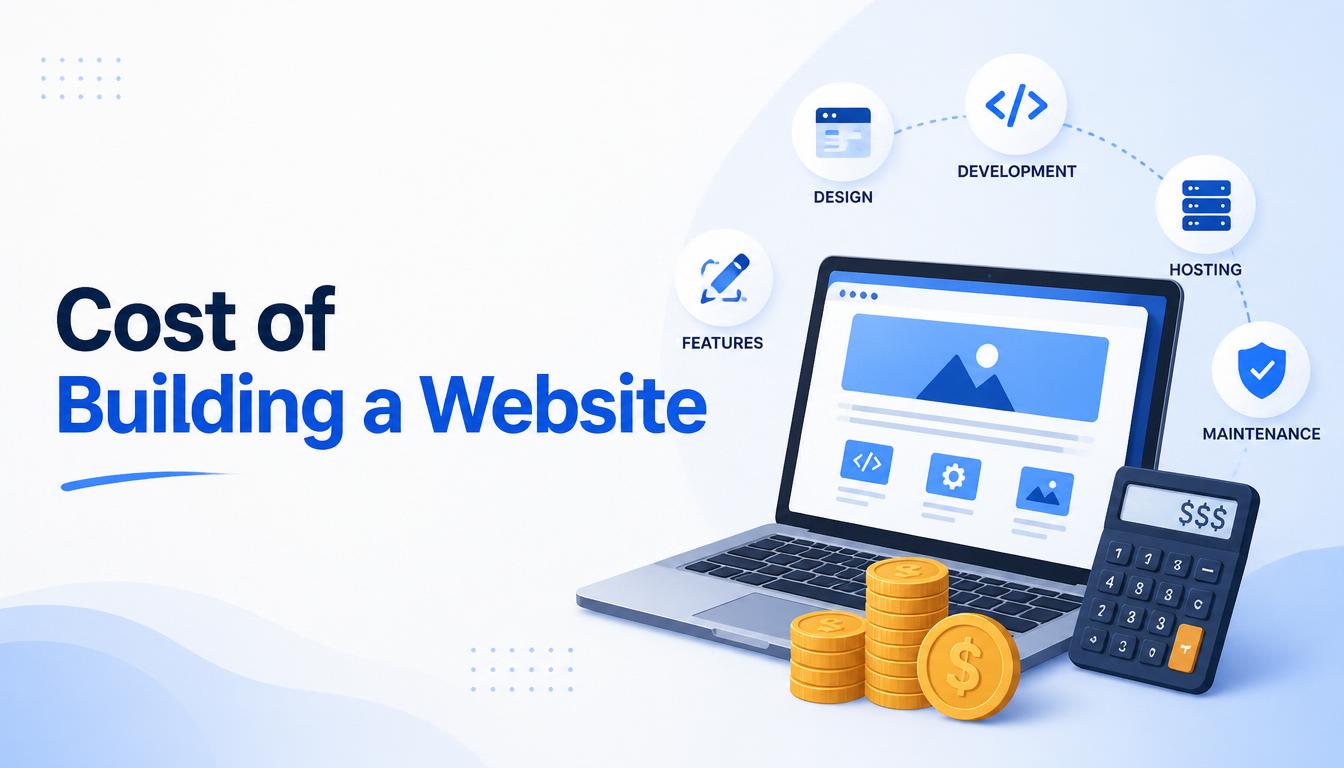
A domain name and hosting package are only the foundation of a successful website. To understand why every business should have its own website, read our article on Why Your Business Needs a Website. You may also find Cost of Building a Website in Nigeria (2026 Guide) useful when planning your website budget. If you're ready to establish a professional online presence, explore our Website Design & Development Services.

Leave a Reply
Your email address will not be published. Required fields are marked *