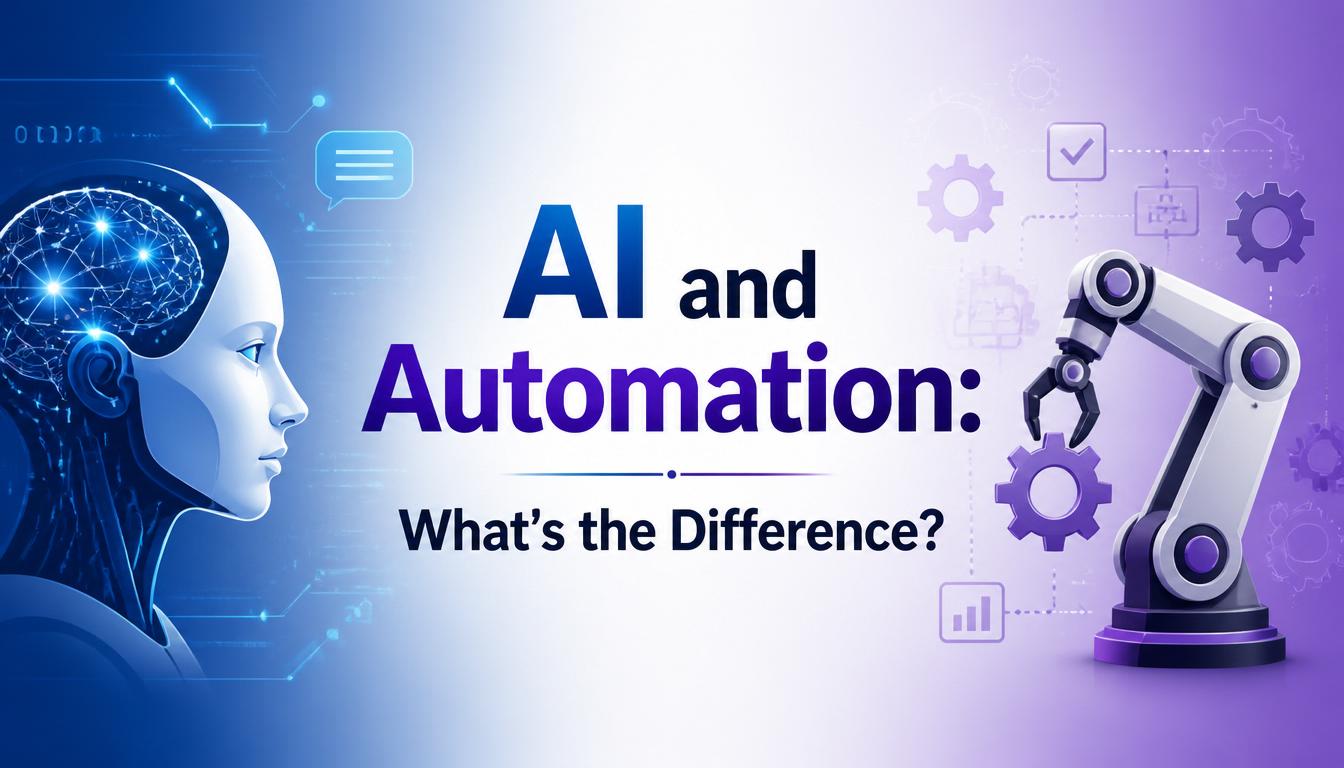
As businesses embrace digital transformation, two terms frequently appear in conversations about technology and efficiency: Artificial Intelligence (AI) and Automation. While they are often used interchangeably, they are not the same thing.
Understanding the difference between AI and automation is important for business owners looking to improve operations, reduce costs, and increase productivity. Both technologies can deliver significant benefits, but they solve different problems and work in different ways.
The future of business is learning to partner with AI and automation to work smarter.
Hannah D. Waters
Let's explore what AI and automation are, how they differ, and how businesses can use them effectively.
What is Automation?
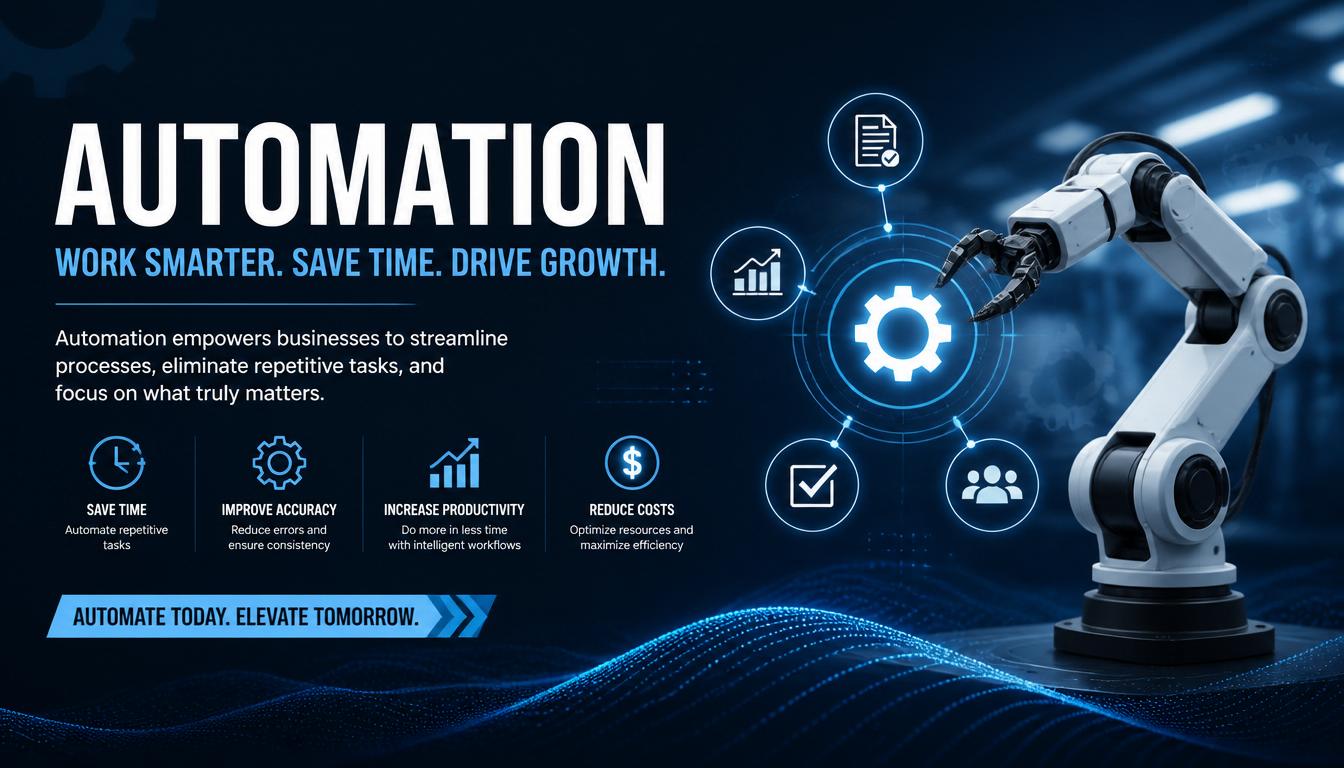
Automation refers to the use of technology to perform repetitive tasks with minimal human intervention.
Automated systems follow predefined rules and instructions to complete specific actions. They do not learn, think, or adapt on their own.
Examples of Automation
- Sending automatic email responses
- Processing invoices
- Scheduling appointments
- Generating reports
- Updating inventory records
- Payroll processing
Automation is designed to improve efficiency by eliminating repetitive manual work.
Key Characteristics of Automation
- Rule-based
- Repetitive task execution
- Consistent outcomes
- Requires predefined instructions
- Limited adaptability
What is Artificial Intelligence (AI)?
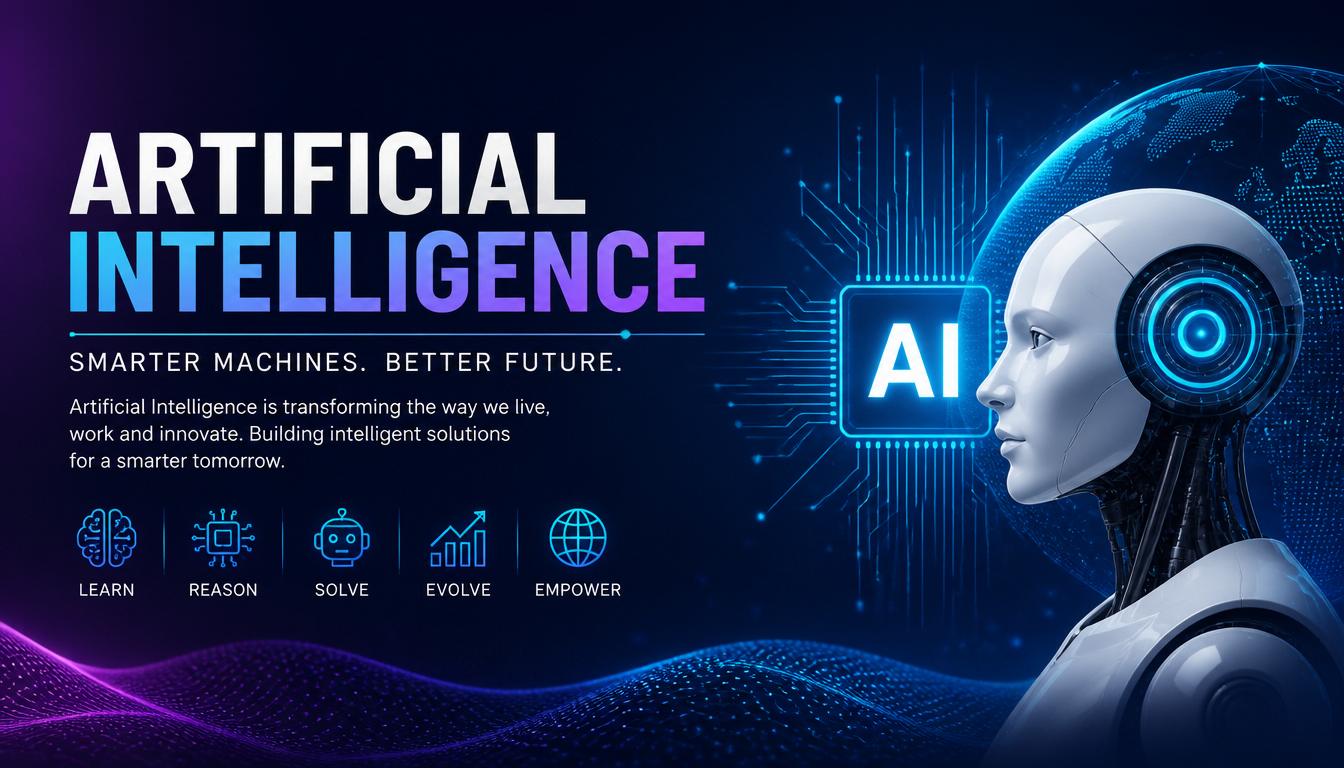
Artificial Intelligence is a technology that enables computer systems to analyze information, recognize patterns, learn from data, and make predictions or recommendations.
Unlike traditional automation, AI can adapt and improve its performance over time based on the information it processes.
Examples of AI
- Chatbots that understand customer questions
- Recommendation engines
- Fraud detection systems
- Predictive analytics
- Voice assistants
- Image recognition software
AI is designed to simulate aspects of human intelligence and decision-making.
Key Characteristics of AI
- Learns from data
- Adapts to changing conditions
- Makes predictions
- Identifies patterns
- Supports decision-making
The Main Difference Between AI and Automation
The simplest way to understand the difference is:
Automation Follows Rules
Automation performs tasks exactly as programmed.
AI Learns and Adapts
AI analyzes data, identifies patterns, and can improve its performance over time.
- Online ordering
- Secure payment integration
- Personalized recommendations
- Loyalty programs
- Promotional notifications
Example: Customer Service
Traditional Automation
A customer fills out a contact form and automatically receives a confirmation email.
The system follows a predefined rule:
If form submitted → Send email.
AI-Powered Customer Service
An AI chatbot can understand customer questions, provide relevant answers, learn from interactions, and improve responses over time.
Instead of simply following a fixed rule, the system can interpret and respond intelligently.
Automation vs AI: Key Comparison
| Feature | Automation | Artificial Intelligence (AI) |
|---|---|---|
| Definition | Uses predefined rules to perform repetitive tasks automatically. | Uses data and algorithms to learn, reason, and make decisions. |
| Decision Making | Follows fixed instructions. | Can analyze data and make intelligent decisions. |
| Learning Ability | Does not learn or adapt. | Learns and improves from data over time. |
| Complexity | Suitable for simple, repetitive tasks. | Handles complex tasks and large datasets. |
| Flexibility | Limited to programmed workflows. | Can adapt to changing conditions and inputs. |
| Examples | Email autoresponders, scheduled backups, invoice generation. | Chatbots, recommendation engines, fraud detection systems. |
| Human Intervention | Requires setup and rule configuration. | Requires training but can operate with minimal supervision. |
| Data Usage | Uses predefined inputs and outputs. | Analyzes large amounts of data to generate insights. |
| Primary Goal | Increase efficiency and reduce manual work. | Simulate human intelligence and improve decision-making. |
| Best For | Routine business processes. | Predictive analysis, personalization, and intelligent automation. |
Benefits of Automation
Automation helps businesses streamline routine processes and improve operational efficiency.
Advantages include
- Faster task completion
- Reduced manual workload
- Lower operational costs
- Improved consistency
- Fewer human errors
- Increased productivity
Automation is ideal for repetitive and predictable tasks.
Benefits of AI
AI enables businesses to make smarter decisions and gain deeper insights from data.
Advantages include
- Predictive analytics
- Enhanced customer experiences
- Personalized recommendations
- Intelligent decision support
- Improved forecasting
- Greater operational intelligence
AI is ideal for tasks involving data analysis, pattern recognition, and decision-making.
Can AI and Automation Work Together?
Absolutely.
In fact, many modern business solutions combine AI and automation to create smarter workflows.
Example: Lead Management
Automation
A new lead is automatically added to the CRM system.
AI:
The system analyzes the lead's behavior and predicts the likelihood of conversion.
Automation:
High-priority leads are automatically assigned to sales representatives.
This combination improves efficiency while enabling better decision-making.
Common Business Applications
Automation Applications
- Payroll processing
- Invoice generation
- Appointment scheduling
- Inventory updates
- Email workflows
- Employee onboarding
AI Applications
- Customer service chatbots
- Predictive sales forecasting
- Fraud detection
- Marketing personalization
- Data analytics
- Demand forecasting
Businesses often achieve the best results by using both technologies together.
Which One Does Your Business Need?
The answer depends on your business goals.
Choose Automation if You Want To:
- Eliminate repetitive tasks
- Reduce manual work
- Improve operational efficiency
- Standardize workflows
Choose AI if You Want To:
- Analyze large amounts of data
- Predict future outcomes
- Improve customer experiences
- Make data-driven decisions
Many organizations begin with automation and gradually introduce AI as their digital capabilities mature.
The Future of Business Technology
As technology continues to evolve, the line between AI and automation is becoming increasingly connected.
Modern business systems are combining:
- Workflow automation
- Artificial intelligence
- Machine learning
- MData analytics
- Cloud computing
Together, these technologies are helping businesses become more efficient, agile, and competitive.
Final Thoughts
While AI and automation are related technologies, they serve different purposes. Automation focuses on performing repetitive tasks according to predefined rules, while AI focuses on learning, adapting, and making intelligent decisions based on data.
Understanding the difference helps businesses choose the right solutions for their needs and maximize the benefits of digital transformation.
At SOAR IT, we help businesses implement automation tools, AI-powered solutions, cloud technologies, and custom software systems that improve productivity and support growth.
Ready to Modernize Your Business Operations?
If you're looking to automate processes, develop custom software, or integrate AI-powered solutions into your business, explore our Artificial Intelligence Services and Software Development Services to see how SOAR IT can help.
Contact SOAR IT today to discover how AI and automation can transform your business.
Related Resources
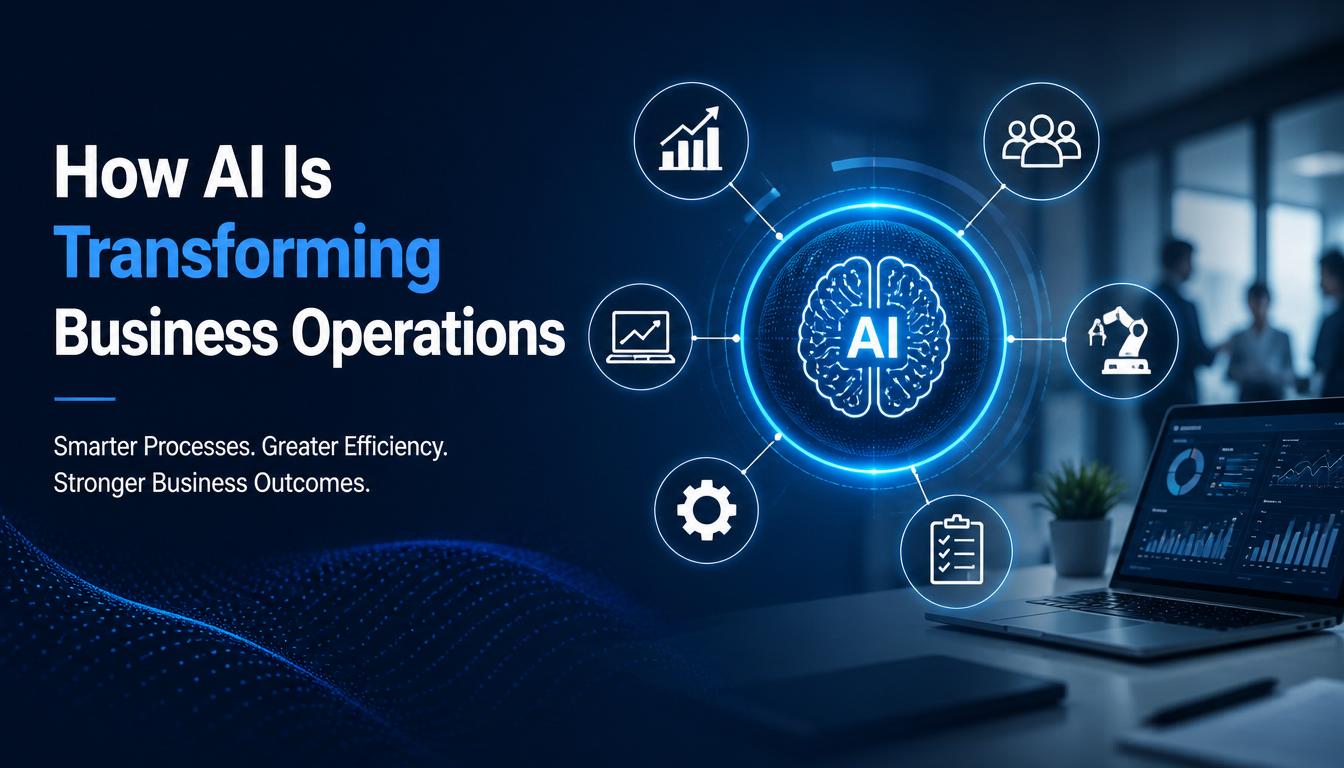
As businesses continue to adopt new technologies, understanding the role of artificial intelligence is becoming increasingly important. Read our article on How AI is Transforming Business Operations to learn how AI is helping organizations improve efficiency, reduce costs, and make smarter decisions.
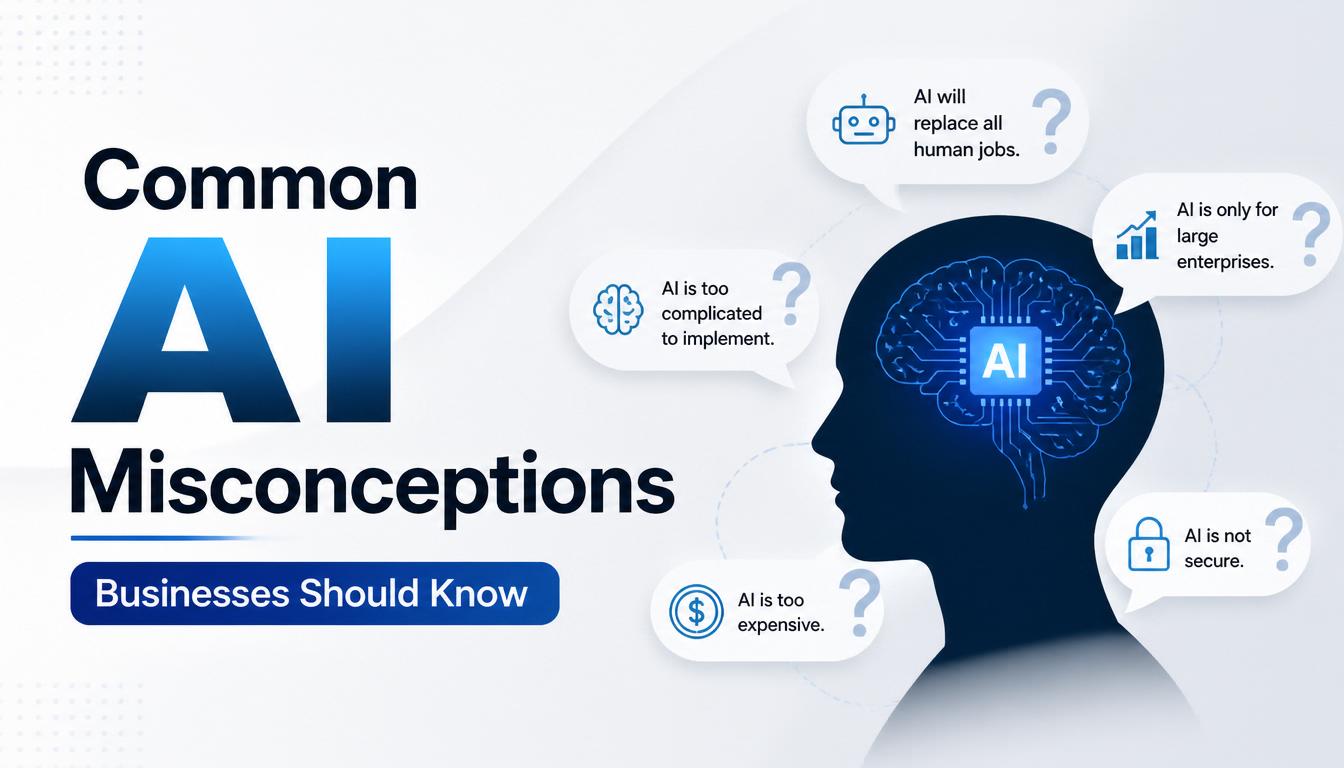
Many business owners have unrealistic expectations about AI. Our guide on Common AI Misconceptions Businesses Should Know explains some of the most common myths and helps you separate fact from fiction.
Automation and AI often work alongside business software to streamline operations. Discover how technology can improve productivity in our article on How Business Software Can Improve Your Daily Operations.

Leave a Reply
Your email address will not be published. Required fields are marked *