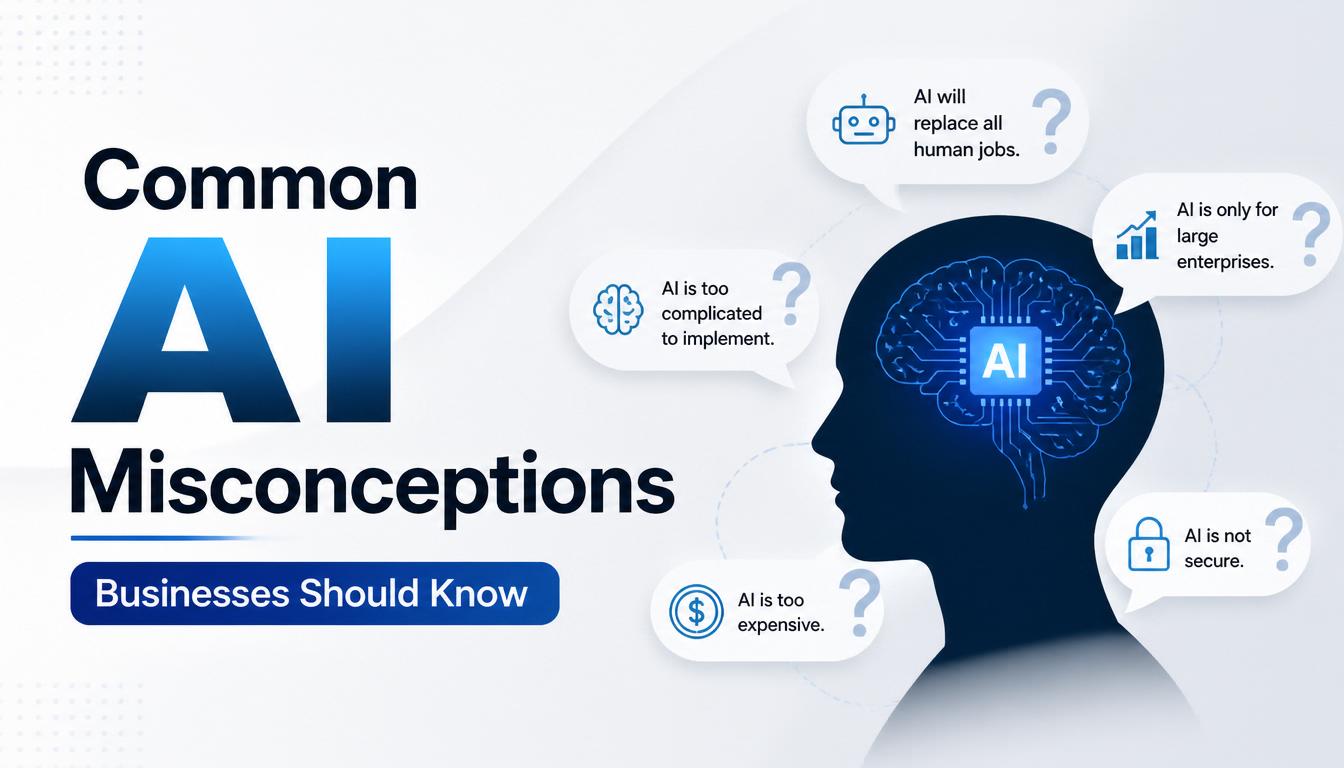
Artificial Intelligence (AI) is rapidly transforming the way businesses operate. From customer service and marketing to data analysis and automation, AI is helping organizations improve efficiency and make smarter decisions.
Despite its growing popularity, many business owners still have misconceptions about what AI is, how it works, and what it can realistically achieve. These misunderstandings often prevent organizations from exploring opportunities that could benefit their operations.
By far, the greatest danger of Artificial Intelligence is that people conclude too early that they understand it.
Eliezer Yudkowsky
To make informed technology decisions, it's important to separate facts from myths.
Here are some of the most common AI misconceptions businesses should know.
1. AI Will Replace All Human Jobs
One of the most widespread fears about AI is that it will completely replace human workers.
The Reality
AI is designed to automate repetitive and time-consuming tasks, not replace every human role.
While some routine tasks can be automated, human skills such as creativity, leadership, problem-solving, emotional intelligence, and strategic thinking remain essential.
What AI Actually Does
- Automates repetitive processes
- Assists decision-making
- Improves productivity
- Supports employees in their work
In most cases, AI works alongside people rather than replacing them.
Key Characteristics of Automation
- Rule-based
- Repetitive task execution
- Consistent outcomes
- Requires predefined instructions
- Limited adaptability
2. AI is Only for Large Companies
Many small business owners believe AI is only accessible to large corporations with massive budgets.
The Reality
AI tools have become more affordable and accessible than ever.
Today, small and medium-sized businesses can use AI-powered solutions for:
- Customer support
- Marketing automation
- Content creation
- Data analysis
- Inventory management
- Sales forecasting
Businesses of all sizes can benefit from AI technology..
3. AI Can Think Like Humans
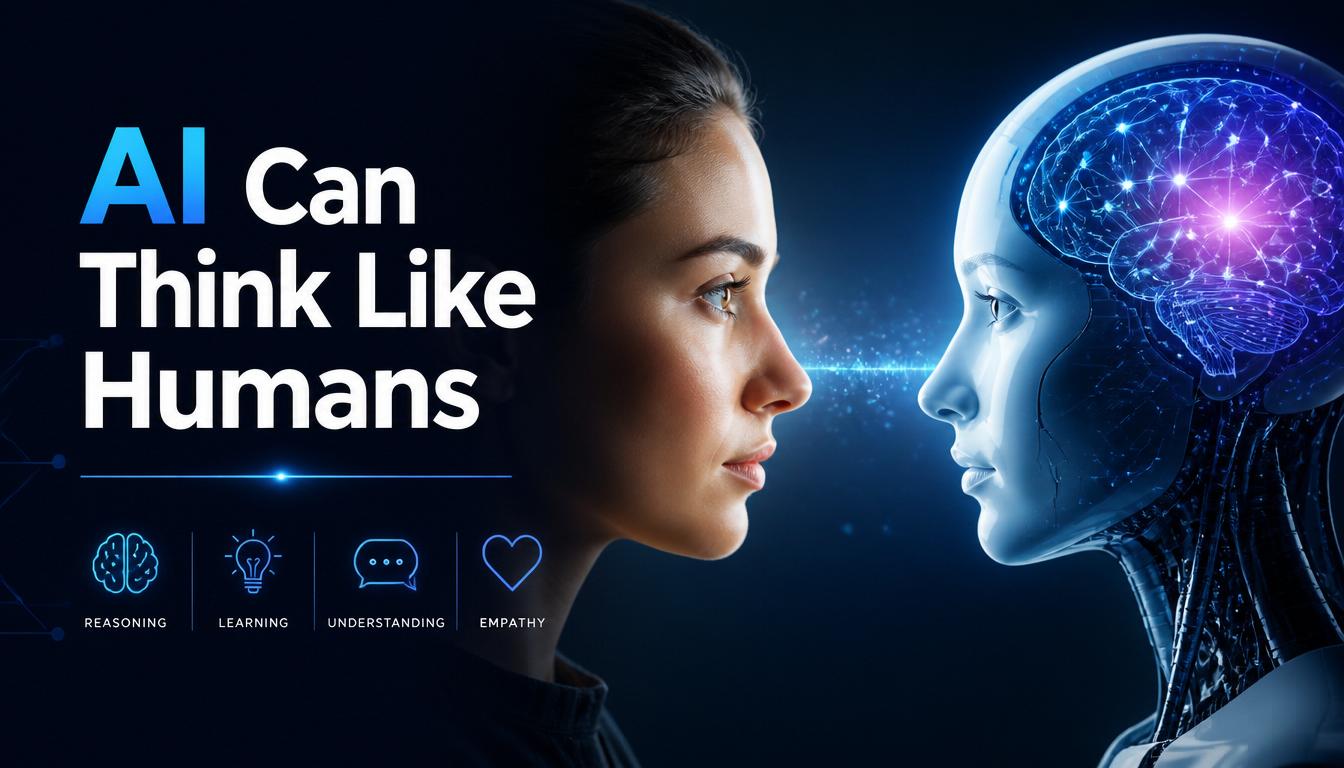
Movies and science fiction often portray AI as machines that think and reason exactly like people.
The Reality
AI does not possess human consciousness, emotions, or independent reasoning.
AI systems operate by analyzing data, identifying patterns, and following programmed algorithms.
Important Difference
AI can process information quickly, but it does not truly understand concepts the way humans do.
Human oversight remains critical when using AI in business environments.
4. AI Always Provides Accurate Answers
Some people assume AI-generated outputs are always correct.
The Reality
AI can make mistakes.
AI systems depend on the quality of the data they are trained on and may occasionally generate inaccurate, incomplete, or misleading information.
Best Practice
Businesses should verify important AI-generated information before making critical decisions.
AI should support decision-making, not replace human judgment.
5. AI is Too Expensive to Implement
Many organizations assume AI requires large investments and specialized infrastructure.
The Reality
Modern AI solutions are often available through affordable subscription-based services.
Examples include
- AI chatbots
- Marketing tools
- CRM automation
- Data analytics platforms
- Content generation tools
Businesses can start small and scale their AI adoption as needed.
6. AI is Only Useful for Technology Companies
Some business owners believe AI only benefits software companies and technology startups.
The Reality
AI is being used across virtually every industry.
Industries Using AI include
- Healthcare
- Education
- Finance
- Retail
- Manufacturing
- Logistics
- Real Estate
- Construction
- Hospitality
AI can improve efficiency and decision-making in almost any business sector.
7. AI Can Solve Every Business Problem
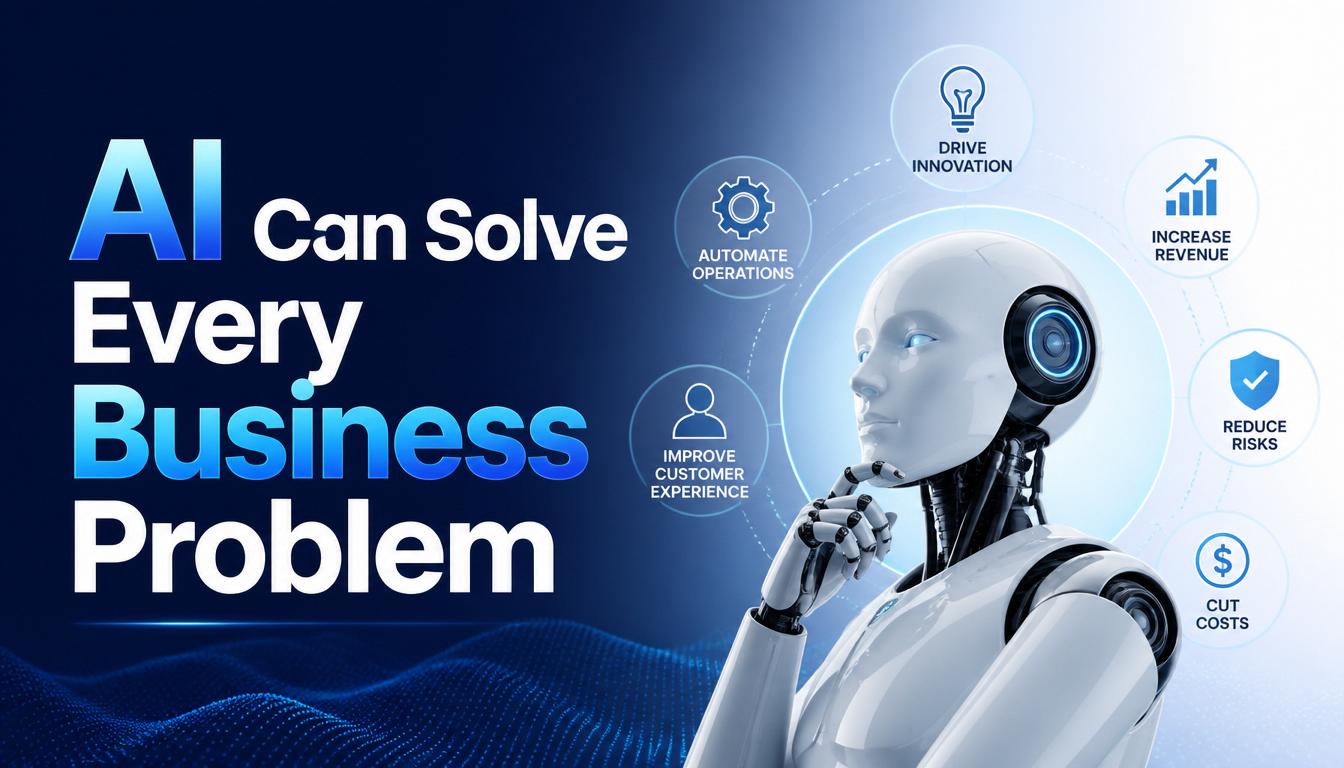
AI is powerful, but it is not a magic solution.
The Reality
Successful AI implementation requires:
- Clear business goals
- Quality data
- Proper planning
- Human oversight
Businesses should focus on specific problems that AI can realistically address rather than expecting it to solve every challenge.
8. AI is Difficult to Use
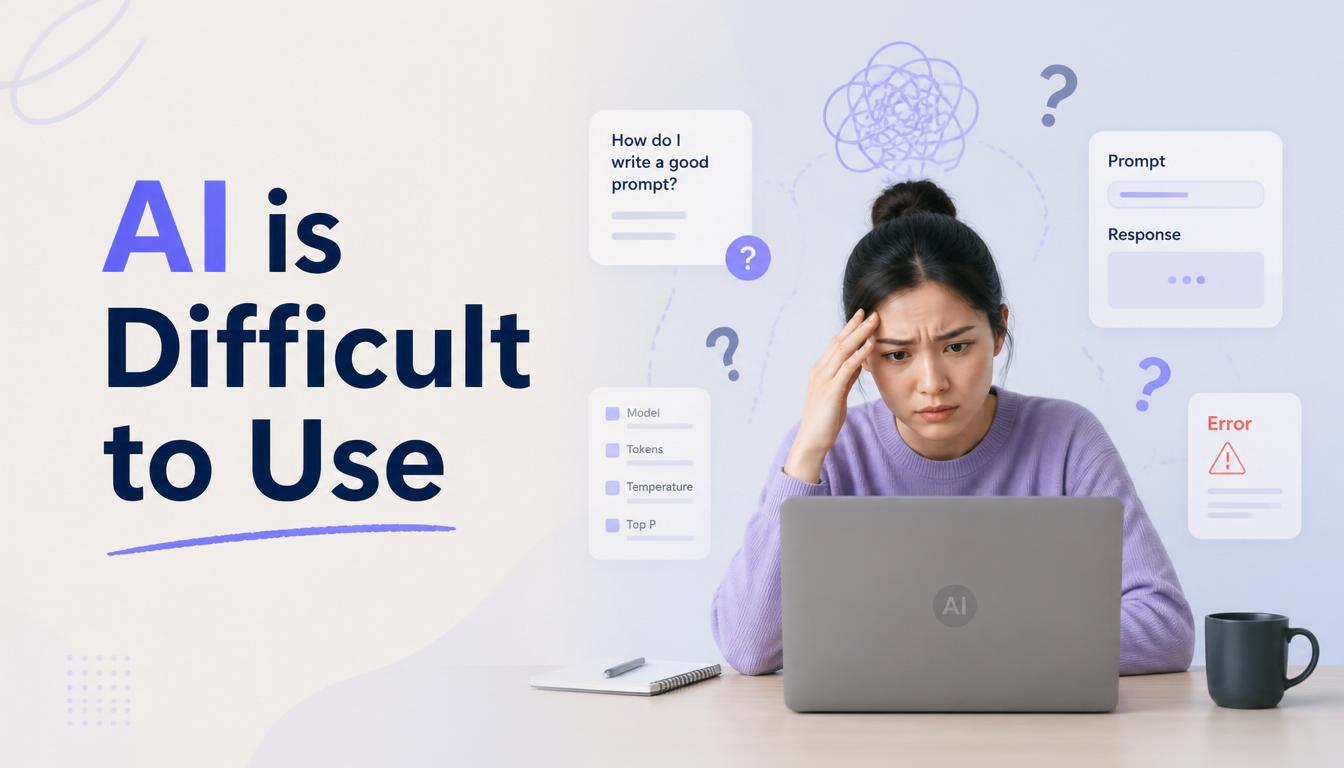
Many people assume AI tools require advanced technical knowledge.
The Reality
Many modern AI applications are designed for everyday users.
Examples include:
- AI writing assistants
- Customer service chatbots
- Business analytics dashboards
- Marketing automation platforms
Many solutions can be used with little or no programming experience.
9. AI is a Future Technology
Some businesses view AI as something they can think about years from now.
The Reality
AI is already being used by businesses worldwide.
Companies are leveraging AI today to:
- Improve customer service
- Automate operations
- Generate insights
- Enhance marketing campaigns
- Increase productivity
Organizations that delay adoption may risk falling behind competitors.
10. AI Eliminates the Need for Human Decision-Making
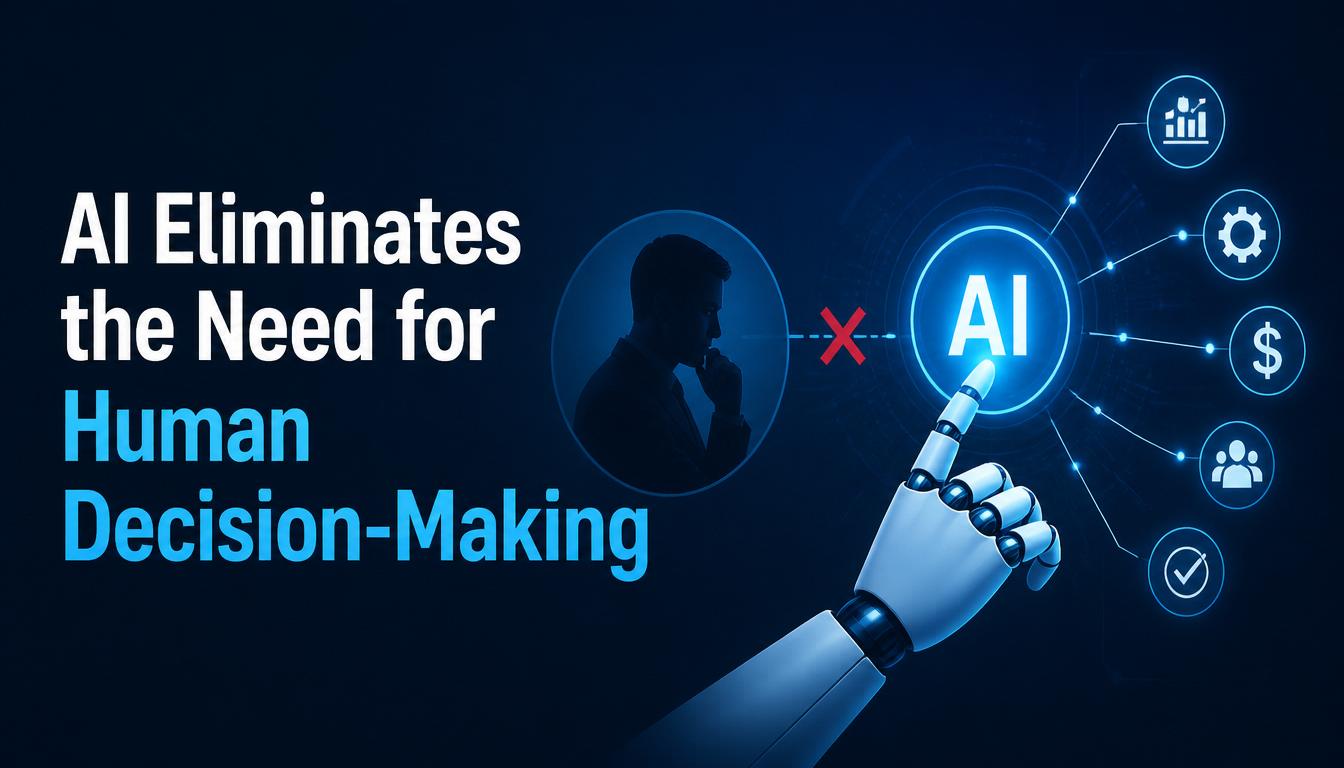
AI can process data and provide recommendations, but it should not completely replace human decision-making.
Why Human Input Matters
Humans provide:
- Context
- Ethics
- Creativity
- Critical thinking
- Strategic judgment
The most effective approach combines AI capabilities with human expertise.
How Businesses Can Use AI Effectively
Instead of fearing AI or expecting unrealistic results, businesses should focus on practical applications.
Good Starting Points include
- Automating routine administrative tasks
- Improving customer support with chatbots
- Using AI-powered analytics tools
- Enhancing marketing campaigns
- Streamlining workflows
- Improving data management
Small improvements can deliver significant business value over time.
The Future of AI in Business
AI adoption is expected to continue growing across industries.
Future developments may include:
- More intelligent automation
- Better customer experiences
- Improved predictive analytics
- Enhanced business insights
- Greater operational efficiency
Businesses that understand AI and use it strategically will be better positioned for future growth.
Final Thoughts
Artificial Intelligence is transforming business operations, but misconceptions often prevent organizations from taking advantage of its benefits. AI is not a replacement for people, nor is it a solution to every problem. Instead, it is a powerful tool that can help businesses improve productivity, reduce costs, enhance customer experiences, and make better decisions.
By understanding what AI can and cannot do, businesses can adopt technology more confidently and achieve meaningful results.
At SOAR IT, we help businesses leverage modern technologies, automation tools, custom software solutions, and digital transformation strategies to improve efficiency and drive growth.
Ready to Explore AI for Your Business?
Discover practical ways AI can help automate processes, improve productivity, and support business growth.
Contact SOAR IT today to learn how AI and digital solutions can transform your business operations.
Related Resources
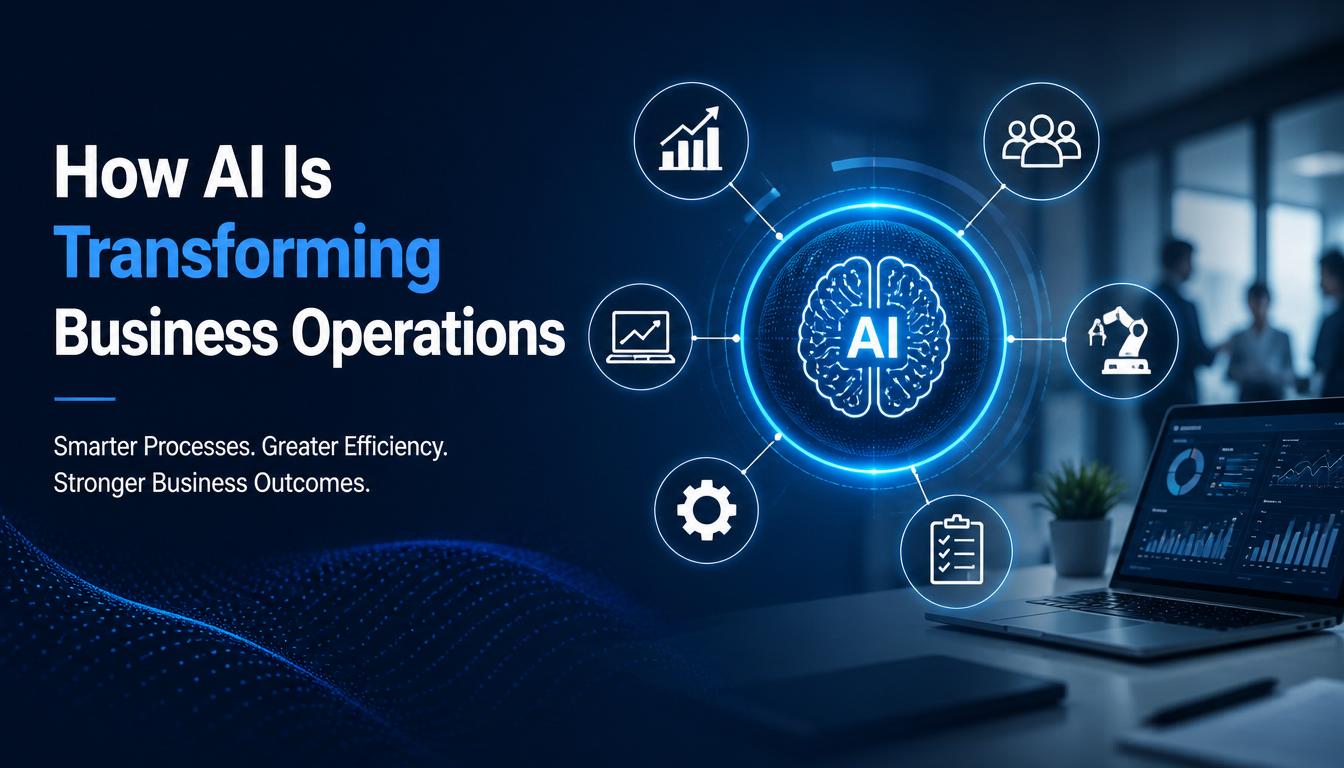
Artificial intelligence is rapidly changing how businesses operate, but understanding its real-world applications is essential. Read our article on How AI Is Transforming Business Operations to learn how companies are using AI to improve efficiency, automate tasks, and enhance customer experiences.
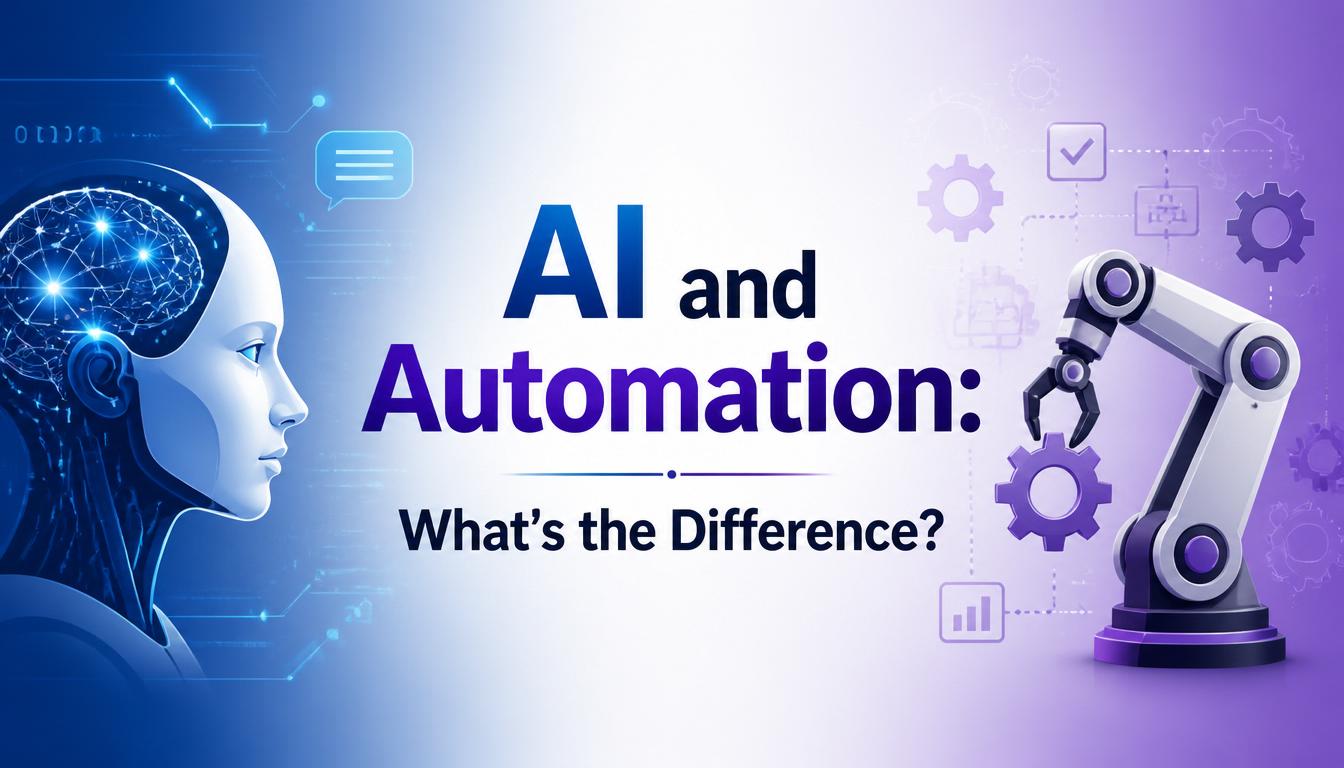
Many people confuse AI with automation, even though they serve different purposes. Our guide on AI and Automation: What's the Difference? explains how these technologies work and when businesses should use them.
Businesses looking to improve productivity can also benefit from understanding the role of software solutions. Explore How Business Software Can Improve Your Daily Operations to discover how technology can streamline workflows and reduce operational costs.
If you're considering AI-powered solutions, automation tools, or custom business software, explore our Artificial Intelligence Services and Software Development Services to see how SOAR IT can help your business leverage modern technology for growth.

Leave a Reply
Your email address will not be published. Required fields are marked *