Cybersecurity is often treated as an IT issue that can be addressed later.
But by then, the cost of ignoring cybersecurity can be much greater than the cost of preventing the problem.
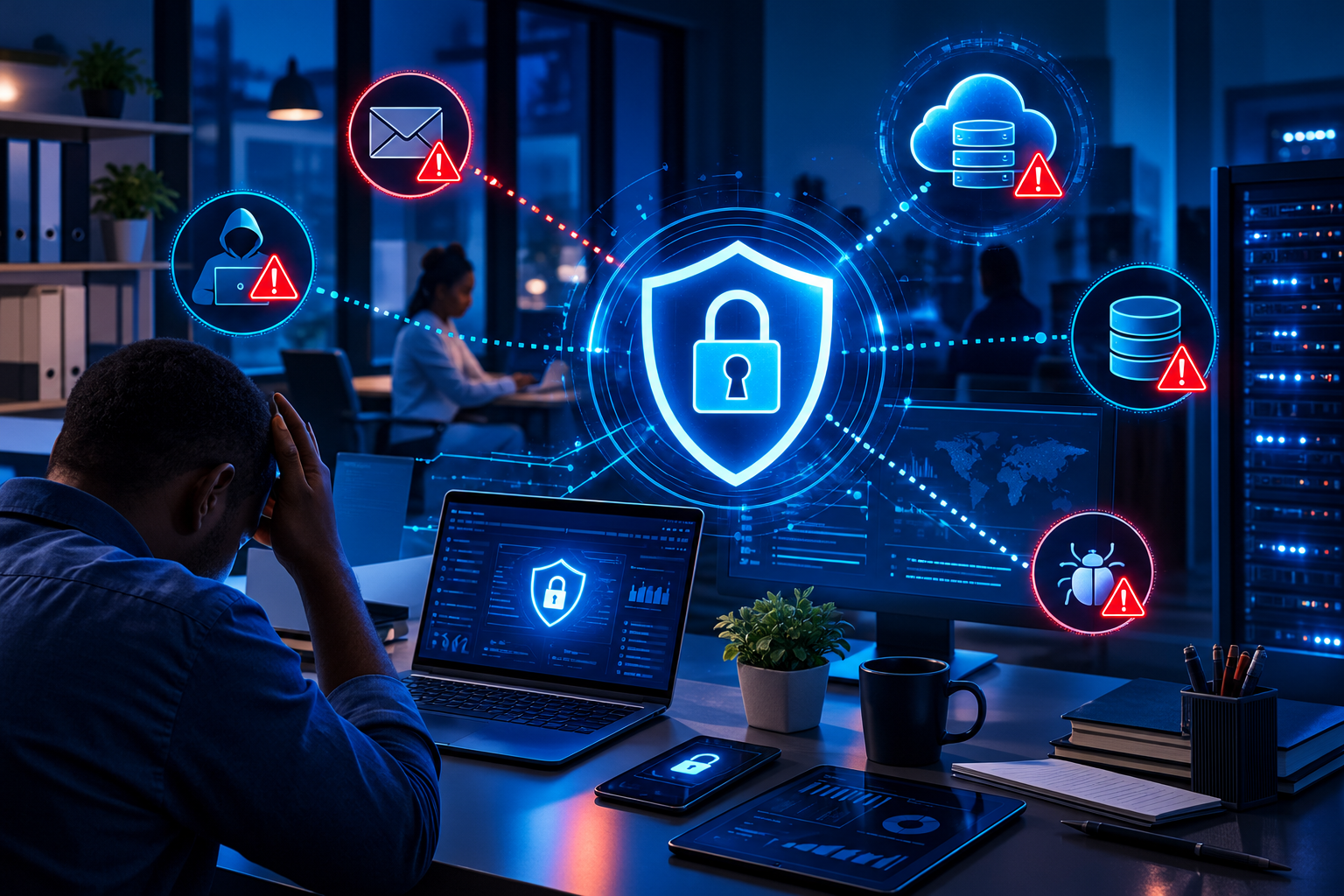
A compromised email account, hacked website, stolen customer information, ransomware attack, or unauthorized access to a business system can disrupt operations and create financial and reputational consequences.
For businesses of every size, cybersecurity should be considered part of protecting the business itself.
What Does It Mean to Ignore Cybersecurity?
Ignoring cybersecurity does not necessarily mean that a business has no antivirus software or security tools.
It can also mean:
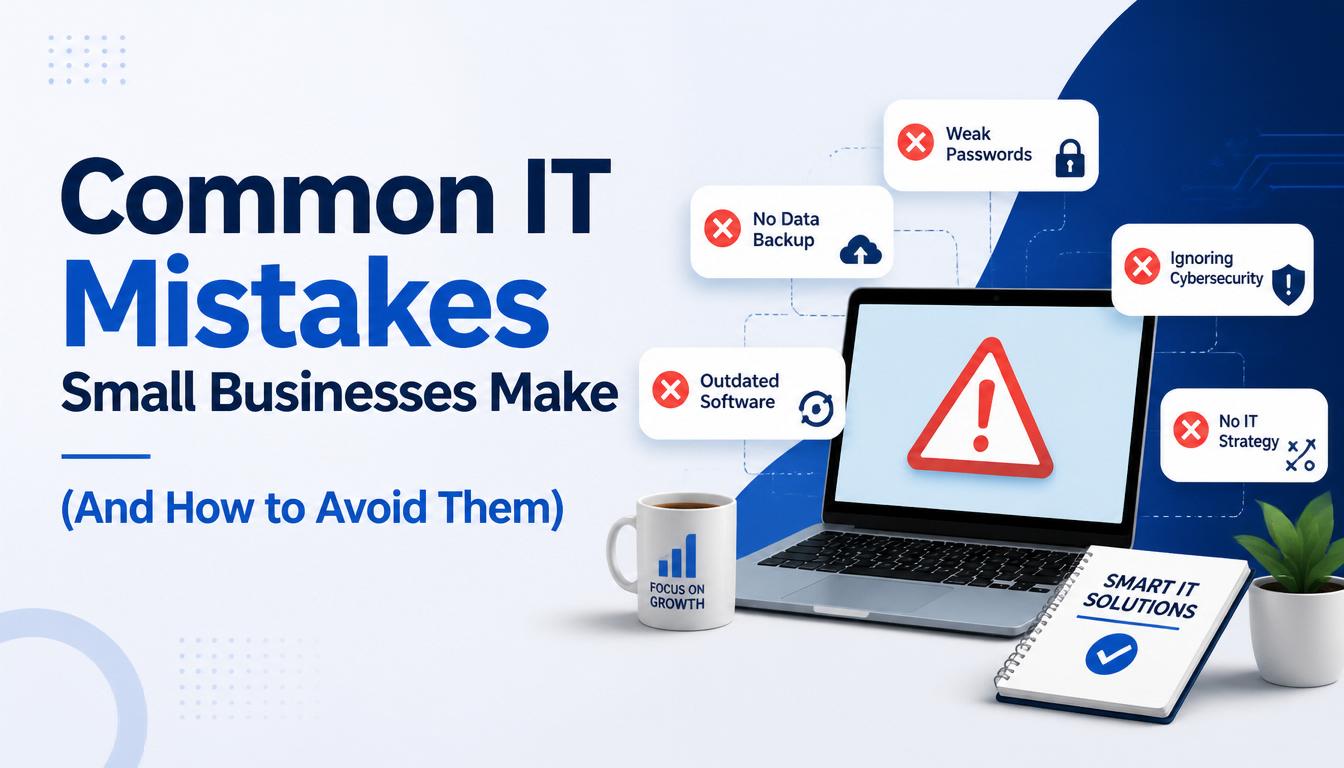
- Using weak passwords
- Delaying important software updates
- Giving employees unnecessary system access
- Failing to back up important data
- Ignoring suspicious login activity
- Using outdated software
- Not training employees
- Leaving old user accounts active
- Failing to secure a business website
- Having no plan for responding to security incidents
These small weaknesses can accumulate and create significant risks.
The Financial Cost of a Cybersecurity Incident
One of the most obvious consequences of a cyber incident is financial loss.
A business may face costs associated with:
- Fraudulent transactions
- Stolen funds
- System recovery
- Emergency technical support
- Data restoration
- Replacing compromised equipment
- Security assessments
- Legal services
- Business interruption
- Customer support
The final cost depends on the nature and severity of the incident, but even a relatively small business can experience significant disruption.
Prevention Can Be Less Expensive Than Recovery
Investing in appropriate security controls before an incident occurs can help reduce exposure.
This could include:
- Multi-factor authentication
- Secure backups
- Employee training
- Software maintenance
- Access controls
- Website security
- Endpoint protection
- Network security
- Regular security assessments
Cybersecurity spending should therefore be viewed as an investment in business resilience.
The Cost of Business Downtime
Imagine that your business cannot access its systems for an entire day.
Your employees may be unable to:
- Process orders
- Respond to customers
- Access files
- Send emails
- Process transactions
- Manage inventory
- Access accounting systems
- Deliver online services
If the disruption lasts several days, the consequences can become even more serious.
For businesses that rely heavily on digital systems, downtime can quickly become lost productivity and lost revenue.
Damage to Customer Trust
Customers trust businesses with their information.
They may provide:
- Names
- Phone numbers
- Email addresses
- Addresses
- Account information
- Transaction information
- Other personal information
When a security incident exposes customer information, the business may face questions about how the information was protected.
Even after the technical problem has been resolved, rebuilding customer confidence can take time.
Trust is one of the most valuable assets a business has—and cybersecurity plays an important role in protecting it.
Reputational Damage
A cybersecurity incident can affect how people perceive a company.
Potential customers may ask:
- Can I trust this business with my information?
Legal and Regulatory Consequences
Businesses that collect or process personal information may have legal and regulatory responsibilities concerning how that information is handled.
Organizations operating in Nigeria should understand applicable requirements under the Nigeria Data Protection Act (NDPA) 2023 and relevant guidance from the Nigeria Data Protection Commission (NDPC).
Depending on the circumstances, a security incident involving personal data may create additional legal, regulatory, contractual, or notification responsibilities.
Businesses should obtain appropriate professional advice when necessary and avoid assuming that one compliance approach applies to every organization.
The Cost of Lost or Stolen Data
Data is one of the most valuable assets of a modern business.
Consider losing access to:
- Customer records
- Financial information
- Contracts
- Business documents
- Product information
- Employee records
- Website databases
- Software source code
If reliable backups do not exist, recovering this information may be difficult or impossible.
This is why data protection and backup strategies should be part of a business's cybersecurity plan.
Cybersecurity Can Affect Business Growth
Security can also influence whether a business is able to work with larger organizations.
Some customers, partners, investors, and corporate clients may expect businesses to demonstrate appropriate security and data-protection practices.
A company with weak security controls may find it more difficult to satisfy certain requirements or pass security reviews.
Strong cybersecurity can therefore support business growth rather than simply prevent attacks.
Small Businesses Should Not Assume They Are Too Small to Be Targeted
One common misconception is:
- “Hackers only target large companies.”
Cybercriminals may target businesses of all sizes.
Attackers often look for opportunities where security controls are weak.
A small business may have:
- Valuable customer information
- Financial accounts
- Email accounts
- Administrative credentials
- Website access
- Cloud services
- Payment systems
The size of the company does not automatically eliminate the risk.
The Hidden Cost: Time and Stress
The cost of cybersecurity incidents isn't always visible on an invoice.
Business owners and employees may spend days or weeks dealing with:
- System recovery
- Customer complaints
- Password resets
- Investigations
- Lost productivity
- Technical problems
- Communication with service providers
Instead of focusing on business growth, management may be forced to focus on recovery.
How Businesses Can Reduce Cybersecurity Risk
Businesses do not need to implement every security measure at once.
Start with the fundamentals.
Protect Important Accounts
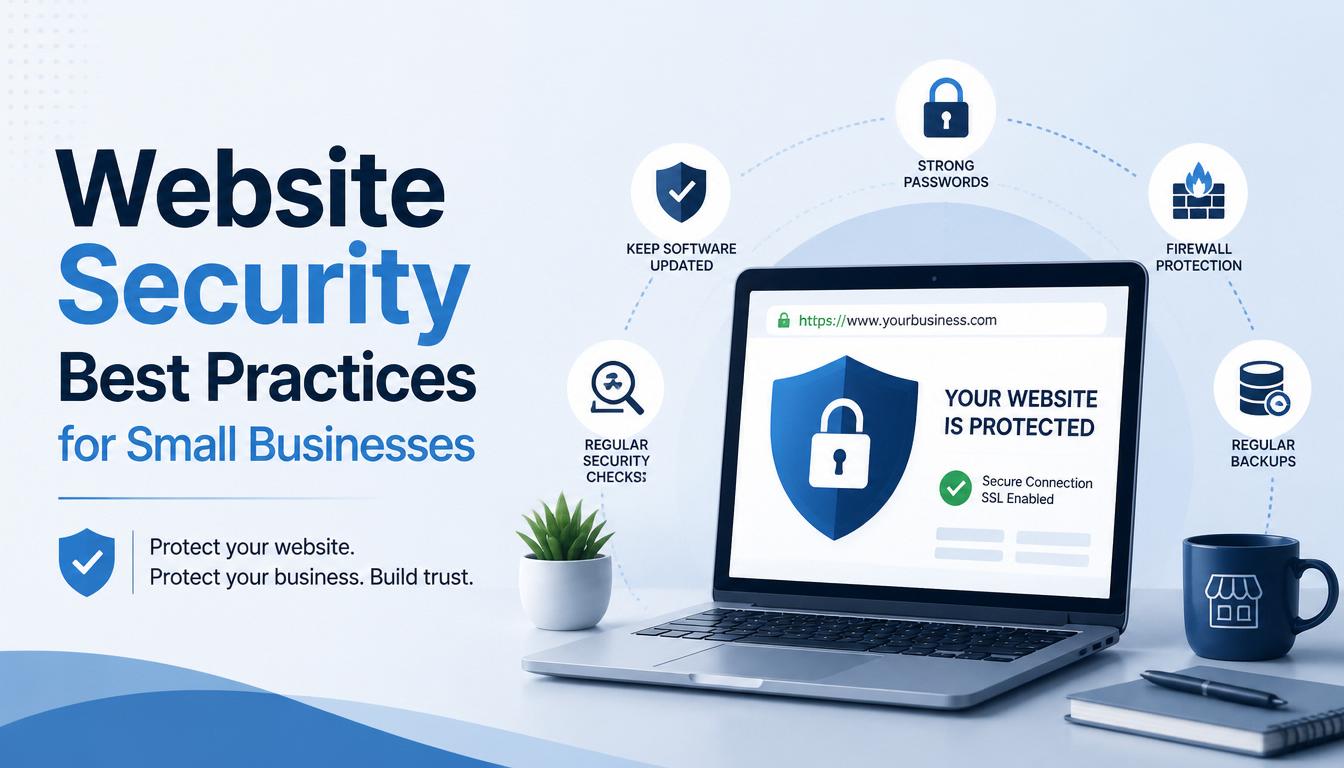
Use strong, unique passwords and enable multi-factor authentication where available.
Keep Software Updated
Regularly maintain websites, applications, operating systems, plugins, servers, and other supported software.
Back Up Critical Data
Maintain reliable backups and test whether important information can actually be restored.
Control Access
Employees should only have access to the systems and information required for their responsibilities.
Train Employees
Teach employees how to recognize phishing, suspicious links, fraudulent requests, and other common threats.
Secure Websites and Applications
Security should be considered during development and throughout the maintenance lifecycle.
Monitor Your Systems
Be aware of unusual login activity, unexpected changes, suspicious files, and other indicators of potential compromise.
Have an Incident Response Plan
Know who should respond, what systems should be isolated, how recovery will occur, and what communication procedures may be required.
Cybersecurity is an Investment in Business Continuity
Cybersecurity should not be viewed simply as an expense.
It is an investment in protecting:
- Revenue
- Customer relationships
- Business data
- Employees
- Systems
- Reputation
- Business continuity
No cybersecurity strategy can guarantee that an organization will never experience an incident.
However, appropriate preparation can reduce unnecessary exposure and improve an organization's ability to respond and recover.
Final Thoughts
The cost of ignoring cybersecurity can extend far beyond the initial technical problem.
A cyber incident can result in financial losses, operational downtime, data exposure, damaged reputation, customer distrust, and additional recovery costs.
For businesses that depend on technology, cybersecurity should be part of everyday business management.
The best time to strengthen your security is before an incident happens.
At SOAR INNOVATIVE TECHNOLOGY, we help businesses protect and improve their digital infrastructure through cybersecurity, IT support, website and software maintenance, cloud solutions, software development, and other technology services.
Don't wait until a cybersecurity incident disrupts your business.
Talk to SOAR INNOVATIVE TECHNOLOGY about practical ways to strengthen your business's security and digital resilience.

Leave a Reply
Your email address will not be published. Required fields are marked *