In today's digital business environment, data is one of the most valuable assets a company can have.
Businesses collect and process customer names, phone numbers, email addresses, payment information, employee records, business documents, website enquiries, and other sensitive information every day. While this data can help businesses serve customers and make better decisions, it also creates responsibilities.
A data breach, accidental disclosure, unauthorized access, or poor handling of personal information can damage customer trust and disrupt business operations.
For businesses of every size, understanding data protection is no longer optional. It is an important part of responsible business management and cybersecurity.
What is Data Protection?
Data protection refers to the policies, processes, technologies, and practices used to protect information from unauthorized access, misuse, loss, alteration, disclosure, or destruction.
It covers the entire lifecycle of data—from the moment it is collected to how it is stored, used, shared, archived, and eventually deleted.
Data protection is not only about installing antivirus software or securing a database. It also involves how employees handle information and how a business designs its systems and processes.
Why is Data Protection Important for Businesses?
1. It Protects Customer Trust
Customers expect businesses to handle their information responsibly.
If personal information is exposed because of poor security practices, customers may lose confidence in the company.
Trust takes time to build, but a single serious data incident can significantly affect a company's reputation.
2. It Helps Reduce Cybersecurity Risks
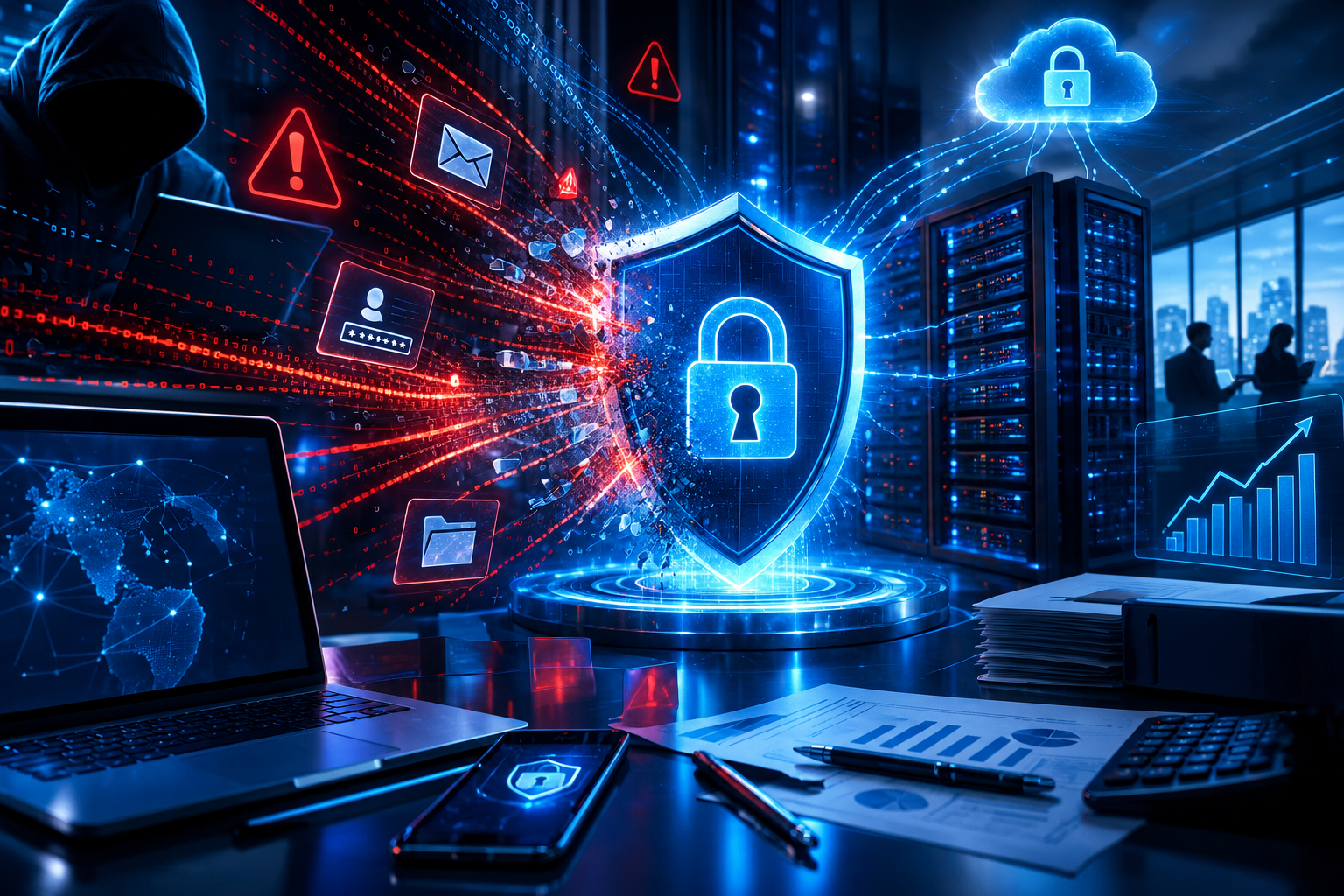
Cybercriminals frequently target business systems and databases because they may contain valuable information.
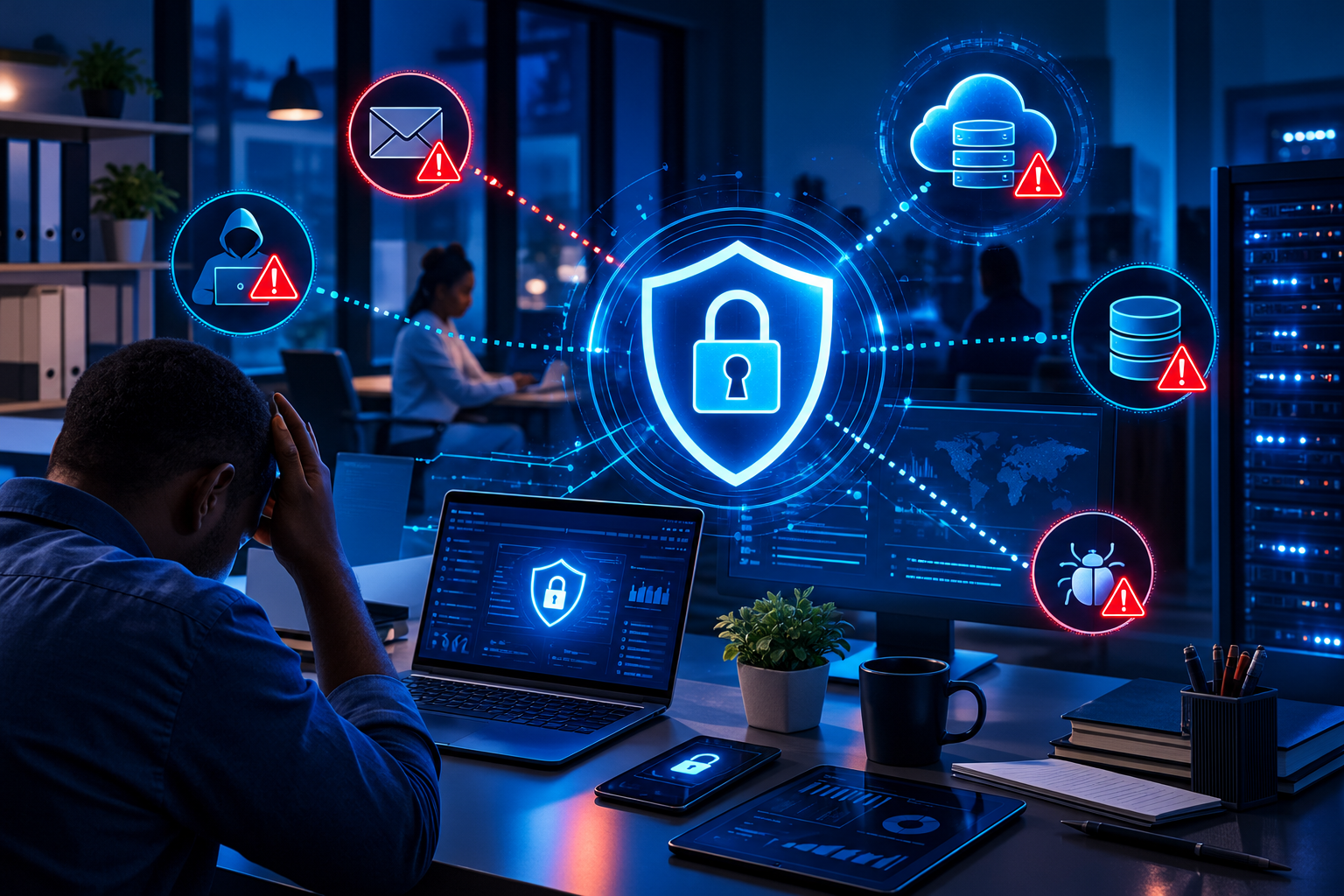
Strong data protection practices can reduce the risk associated with threats such as:
- Unauthorized access
- Phishing attacks
- Malware
- Ransomware
- Stolen passwords
- Insider threats
- Database breaches
- Lost or stolen devices
No security system can eliminate every risk, but appropriate controls can make it significantly harder for unauthorized individuals to access valuable information.
3. It Supports Legal and Regulatory Compliance
Businesses may have legal obligations regarding how personal information is collected, processed, stored, and shared.
In Nigeria, businesses should pay particular attention to the Nigeria Data Protection Act (NDPA) 2023 and applicable requirements issued by the Nigeria Data Protection Commission (NDPC).
The exact obligations can depend on factors such as the type of organization, the nature of the data being processed, and the organization's activities.
Businesses should therefore understand which requirements apply to them rather than assuming that a single data-protection approach works for everyone.
4. It Protects Business Information
Data protection is not limited to customer information.
Businesses also need to protect:
- Financial records
- Employee information
- Contracts
- Intellectual property
- Passwords and credentials
- Business strategies
- Supplier information
- Internal communications
- Product information
- Company databases
Losing access to critical business information can interrupt operations and potentially result in financial losses.
What Types of Data Should Businesses Protect?
The information requiring protection depends on the organization and its activities.
Common examples include:
Customer data
- Names
- Phone numbers
- Email addresses
- Addresses
- Account information
Employee data
- Employment records
- Contact information
- Payroll information
- Identification information
Financial information
- Invoices
- Transaction records
- Payment information
- Financial reports
Technical information
- Login credentials
- API keys
- Database credentials
- System configuration information
- Creates viral and shareable content
The Principle of Data Minimization
One important concept businesses should understand is data minimization.
Simply put, businesses should avoid collecting more personal information than they genuinely need for a legitimate purpose.
For example, if a customer only needs to submit their name, email address, and enquiry to contact a business, collecting unnecessary information increases the amount of data the business must protect.
Collecting less unnecessary data can reduce exposure and simplify data management.
Businesses Should Know What Data They Have
One of the first steps toward better data protection is understanding what information the organization actually holds.
A business should consider questions such as:
- What personal information do we collect?
- Why do we collect it?
- Where is it stored?
- Who has access to it?
- How long do we keep it?
- Do we share it with third parties?
- What happens when the information is no longer required?
- What happens if the information is accidentally exposed?
Creating a basic data inventory can help reveal weaknesses that might otherwise remain unnoticed.
Control Who Has Access to Data
Not every employee needs access to every piece of information.
Businesses should follow the principle of least privilege, meaning users should receive only the access necessary to perform their responsibilities.
For example, an employee responsible for customer support may need access to customer contact information but may not need access to payroll records or administrator credentials.
Access controls should also be reviewed when employees change roles or leave the organization.
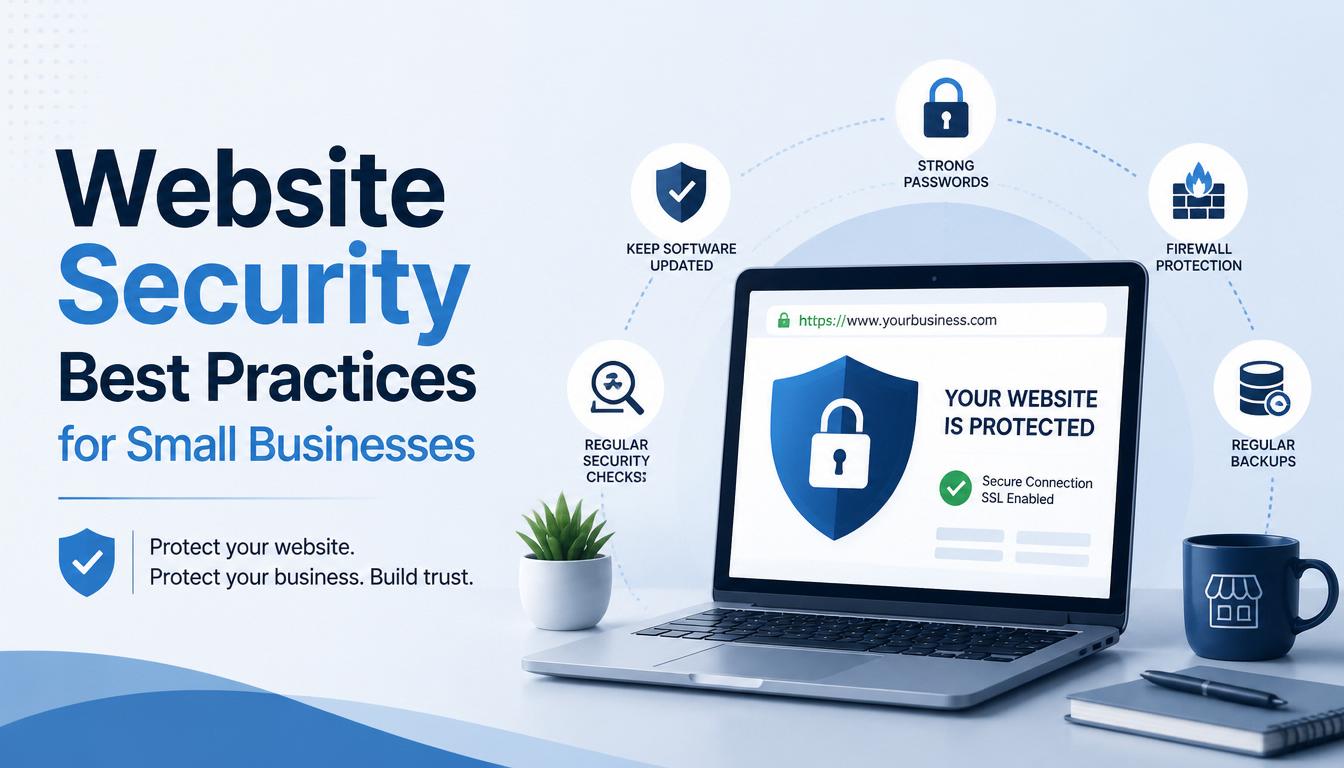
Use Strong Authentication
Passwords remain an important security control, but businesses should not rely on passwords alone for important systems.Where available, businesses should consider:
- Strong, unique passwords
- Multi-factor authentication
- Password managers
- Account lockout protections
- Regular access reviews
- Separate administrator accounts
Multi-factor authentication can provide an additional layer of protection if a password is compromised.
Encrypt Sensitive Information
Encryption converts information into a form that cannot easily be understood without the appropriate key.
Businesses should consider encryption both:
- In transit — while information is being transmitted
- At rest — while information is stored
For example, websites handling personal information should use HTTPS, while sensitive databases and backups should have appropriate security controls.
Keep Systems and Software Updated
Outdated software can contain known vulnerabilities that attackers may exploit.
Businesses should establish a process for keeping:
- Operating systems
- Websites
- Content management systems
- Plugins and libraries
- Mobile applications
- Servers
- Security software
up to date.
Software maintenance is therefore an important part of data protection.
Back Up Important Data
Data protection also involves preparing for data loss.
Businesses should maintain appropriate backups of important information and systems.
A useful backup strategy should consider:
- What information needs to be backed up?
- How frequently should backups occur?
- Where should backups be stored?
- Who can access them?
- How long should they be retained?
- Can the backups actually be restored?
A backup that has never been tested may not provide much protection when it is urgently needed.
Train Employees
Technology alone cannot protect an organization from every data-security problem.
Employees can unintentionally expose information through actions such as:
- Clicking malicious links
- Sharing passwords
- Sending information to the wrong recipient
- Using unsecured devices
- Downloading suspicious files
- Leaving devices unattended
- Using unauthorized applications
Regular cybersecurity awareness training can help employees recognize and avoid common risks.
Have a Data Breach Response Plan
Businesses should not wait until an incident occurs before deciding what to do.
A basic incident response plan should identify:
- Who should be notified internally?
- How will the incident be contained?
- How will affected systems be investigated?
- What information may have been affected?
- What legal or regulatory obligations may apply?
- How will customers or other affected parties be handled?
- How will the business recover?
Depending on the circumstances, applicable laws and regulatory requirements may also impose specific obligations following a personal-data breach.
Choose Technology Partners Carefully
Many businesses rely on third-party providers for hosting, software, cloud services, payment processing, email, analytics, customer relationship management, and other services.
Before sharing personal information with a third party, businesses should understand:
- What information will be shared?
- Why is it required?
- How will it be protected?
- Who can access it?
- Where is it stored?
- What happens when the service ends?
Contracts and appropriate data-processing arrangements may also be necessary depending on the relationship and applicable requirements.
Data Protection Should Be Built Into Software
Data protection should not be something added after a system has already been developed.
When building a website, mobile application, or business software, security and privacy should be considered during the design and development process.
This can include:
- Secure authentication
- Role-based access control
- Input validation
- Secure database design
- Encryption
- Secure API development
- Audit logging
- Secure file uploads
- Backup procedures
- Privacy-conscious data collection
This approach can help businesses build systems that are more secure from the beginning.
A Simple Data Protection Checklist
Businesses can start with the following checklist:
Final Thoughts
Data protection is not only an IT responsibility. It is a business responsibility.
Whether you operate a small business, professional service, school, healthcare organization, retail company, financial business, or growing technology company, the way you collect and manage information matters.
Good data protection combines people, processes, technology, and appropriate governance.
Businesses that take these areas seriously can reduce unnecessary risks, improve their security practices, and build greater confidence among customers and other stakeholders.
At SOAR INNOVATIVE TECHNOLOGY, we help businesses build and maintain technology solutions with security, reliability, and scalability in mind—from websites and custom software to mobile applications, cybersecurity, cloud solutions, and ongoing maintenance.
Need help securing or improving your business technology?
Contact SOAR INNOVATIVE TECHNOLOGY to discuss your requirements and explore a technology solution that fits your business.

Leave a Reply
Your email address will not be published. Required fields are marked *